The Aidelly Blog
Run social for every client, with agents doing the busywork.
Plain-English guides on AI agents, approvals, publishing and reporting for agencies and the people who run them.
235 articles and counting
Latest posts
 Small Business
How to Build a Facebook and Instagram Publishing Workflow That Runs Without You
Most small business owners and marketing teams spend hours every week doing the same thing: writing captions, picking images, figuring out when to post, and then doing it all over again the next day. Basic schedulers help a little, but they still require you to fill the queue manually. This article shows you how to build a Facebook and Instagram publishing workflow that actually runs itself. Not just a queue with posts lined up, but a full agentic system that drafts platform-native content, routes it through approvals when needed, publishes on time, and learns from what performs. You will see exactly what separates a real autonomous workflow from a tool that just holds your posts until you hit publish, and how to set one up without starting from scratch.
11 min read
 Agencies
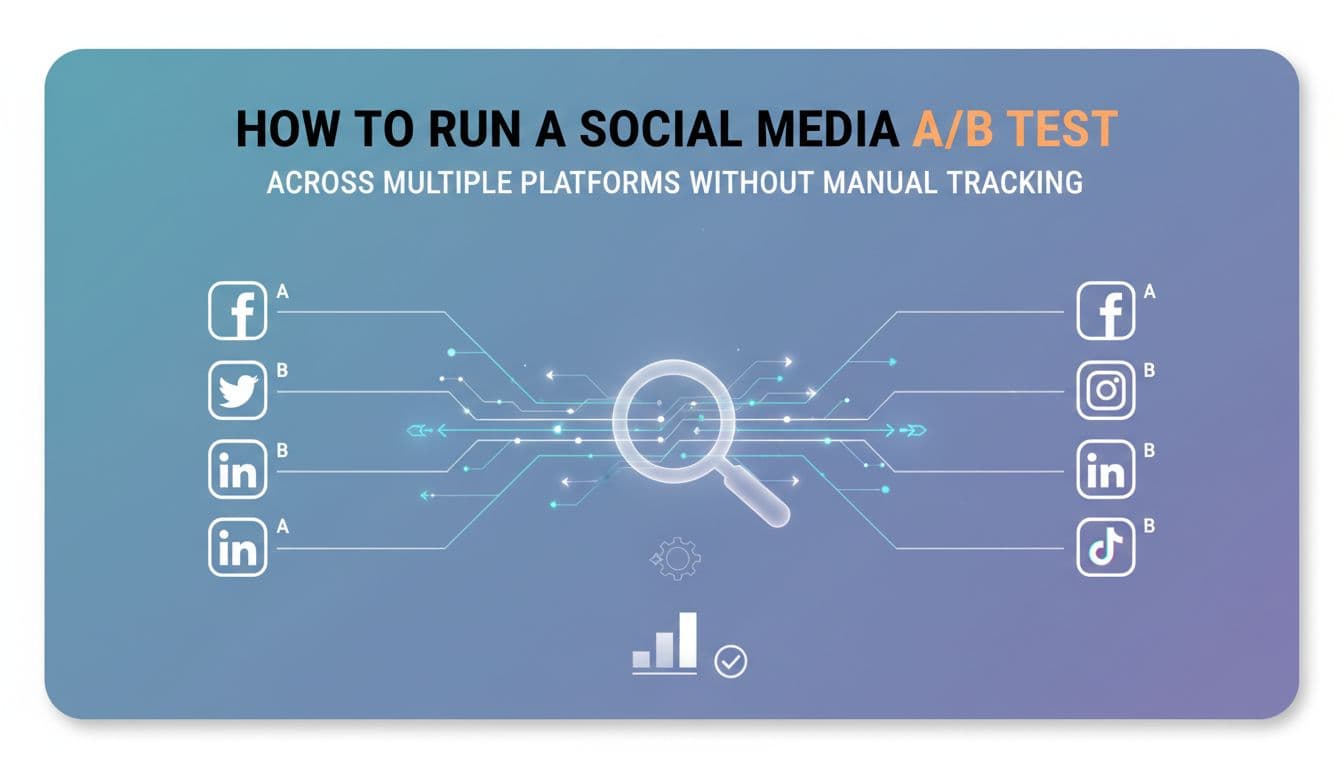
How to Run a Social Media A/B Test Across Multiple Platforms Without Manual Tracking
Most social media A/B tests fail before they even start. Not because the ideas are bad, but because the process falls apart. You post two versions of something, wait a few days, check the numbers on four different apps, copy everything into a spreadsheet, and then try to remember what you were even testing. By the time you have the data, you have already moved on to the next campaign. This guide shows you a better way. You will learn how to set up cross-platform A/B tests with a clear hypothesis, one variable at a time, and let automation handle the tracking so you can focus on what the results actually mean. When you treat social media testing as a continuous agentic workflow instead of a one-off task, you build a compounding advantage that most brands never develop.
11 min read
 Creators
Content Creator Burnout Is a Scheduling Problem: Here's How to Fix It With Automation
Most creators assume burnout means they've lost their passion. But when you dig into what's actually draining them, it's rarely the filming, writing, or designing. It's the posting. The logging in, the reformatting, the guessing about timing, the context switching between six different apps before 9am. That's the part that grinds people down. This article breaks down why creator burnout is fundamentally an operations problem, not a creativity problem, and what you can actually do about it. You'll learn how agentic social media automation removes the repetitive work that causes burnout, how batching content in focused blocks protects your creative energy, and how tools like visual content calendars and cross-platform analytics help you stay consistent without staying stressed. If you're tired of dreading the posting part of your job, this one is for you.
11 min read
 Ecommerce
How to Build a Seasonal Campaign Calendar for an Ecommerce Brand Using AI Agents
Most ecommerce brands build their seasonal campaign calendar the same way every year. Someone opens a spreadsheet, copies last year's dates, and starts filling in post ideas two weeks before the holiday. Then the team scrambles, approvals get rushed, and half the content goes live after demand has already peaked. It's a cycle that costs real revenue. AI agents change this entirely. Instead of reacting to the calendar, your marketing runs ahead of it. This guide walks through how to build a living, revenue-driven seasonal campaign calendar using agentic AI workflows, from analyzing last year's performance data to publishing platform-optimized posts to adjusting creative in real time based on what's actually working. If you run a DTC brand, manage an online store, or lead a marketing team for a product-based business, this is the system you need going into 2026.
12 min read
 Agencies
How Agencies Manage 50+ Client Approval Cycles Without Losing Their Minds
Managing social media approvals for 50+ clients is one of the most underestimated operational challenges in agency life. You're not just tracking one review cycle. You're tracking dozens of them simultaneously, each with different stakeholders, different feedback styles, and different definitions of 'approved.' One client responds in 20 minutes. Another goes silent for four days and then wants everything live by Friday. Meanwhile, your team is buried in follow-up emails, Slack pings, and spreadsheet updates that could be automated. This article breaks down exactly why approval bottlenecks happen at scale, what a smarter workflow looks like, and how agentic AI is changing the game for agencies that manage high client volumes. If you've ever lost a campaign launch to a missed approval email, this one's for you.
10 min read
 Developers
MCP Server for Social Media: How to Connect Claude and ChatGPT to Your Publishing Stack
Most people use Claude or ChatGPT to write social media content, then manually copy it into a scheduler. That extra step costs more time than it seems. Model Context Protocol (MCP) servers eliminate that gap entirely. Instead of switching tabs and pasting content, your AI assistant can draft, schedule, and publish posts directly from your chat interface. Only about seven platforms in the world currently support MCP for social media, making this one of the rarest and most valuable capabilities available to marketing teams right now. This article breaks down what MCP servers actually do, why they matter for social media automation, and how solopreneurs, agencies, and developers can use them to build hands-off publishing workflows. If you already use AI tools for content creation, this is the infrastructure upgrade that makes those tools actually work end-to-end.
13 min read
 Solopreneurs
The Solopreneur's Tech Stack for Running Five Social Accounts Without an Agency
Managing five social media accounts alone sounds like a full-time job. For most solopreneurs, it basically is. Between writing platform-specific captions, reformatting content for Instagram versus LinkedIn, scheduling posts at the right time, and checking analytics across five different dashboards, the hours disappear fast. We're talking 10 to 15 hours a week on tasks that don't directly grow your business. But there's a smarter way to operate. Agentic AI has changed what's possible for solo operators. Instead of manually handling every piece of the social media puzzle, you can build a tech stack that runs autonomously, keeps your brand voice consistent, and publishes across every platform without you touching it every day. This post breaks down exactly how to build that stack and why agentic workflows are the unfair advantage solopreneurs have been waiting for.
9 min read
 Ecommerce
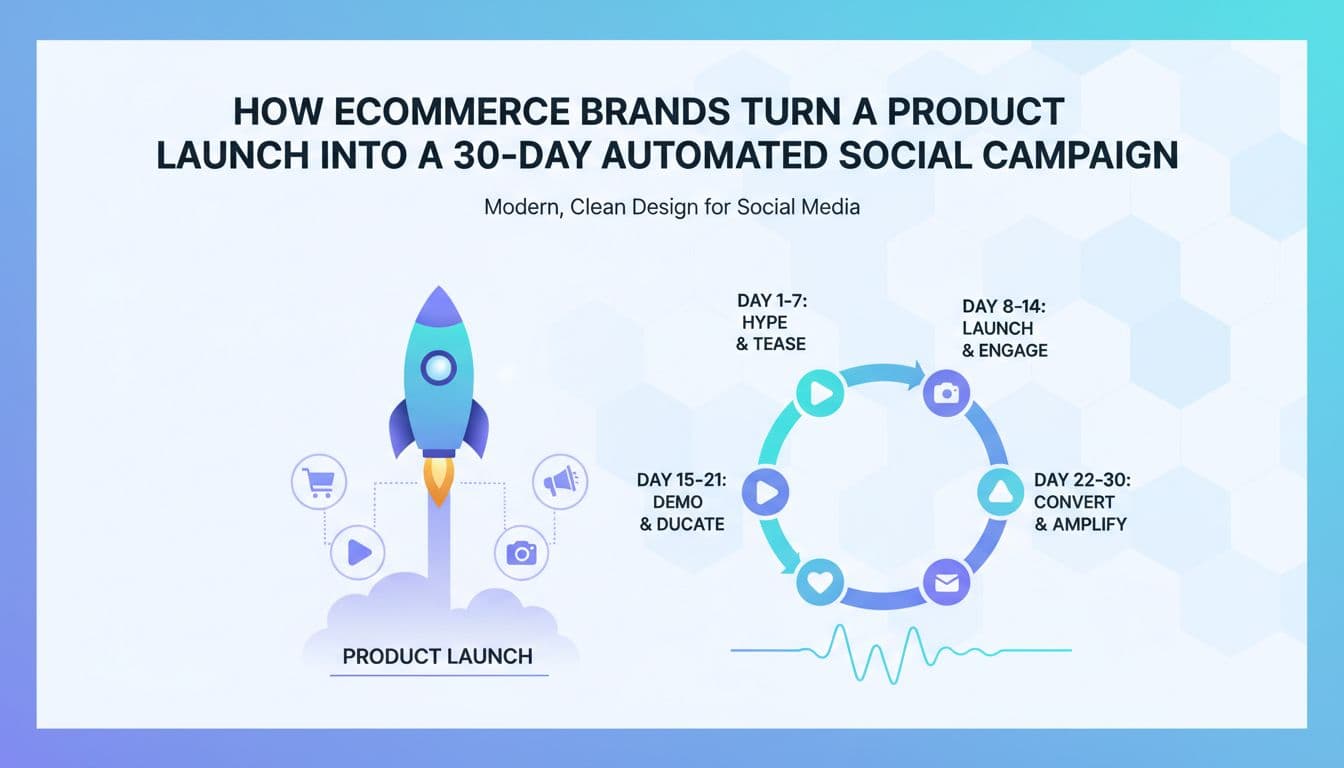
How Ecommerce Brands Turn a Product Launch Into a 30-Day Automated Social Campaign
Most ecommerce product launches follow the same painful pattern. The team spends weeks on the product itself, then scrambles in the final days to throw together social posts. They publish a few things on launch day, maybe follow up once or twice, and then the momentum dies. Sales flatten. The algorithm stops showing your content. And three weeks later, you're wondering why the launch didn't perform. The problem isn't the product. It's the social strategy, or the lack of one that runs itself. Agentic AI workflows change this completely. Instead of manually creating, scheduling, and analyzing posts across Instagram, TikTok, Facebook, and LinkedIn for 30 days straight, AI agents handle the entire campaign arc while you focus on the business. Here's exactly how ecommerce brands build a repeatable, automated launch system that works the same way every time.
11 min read
 Creators
How to Use Cross-Platform Analytics to Kill Underperforming Content Fast
Most marketing teams and solopreneurs post content, check a few numbers, and move on. But without a clear view across every platform, you're flying blind. You might be pouring time and budget into posts that nobody cares about while your best-performing content goes unnoticed on a channel you barely check. Cross-platform analytics changes that. It gives you a unified picture of what's working, what's dead weight, and where to focus next. This guide breaks down how to spot underperforming content fast, make smarter kill-or-keep decisions, and redirect your energy toward content that actually drives results. Whether you manage one brand or ten, the teams that win in 2026 are the ones who move quickly on data, not gut feeling.
11 min read
 Agencies
YouTube Shorts Automation: How Agencies Schedule and Publish at Scale
Managing YouTube Shorts for five, ten, or twenty clients at once is a different beast than running a single channel. The volume alone is brutal. Add approval rounds, brand guidelines, optimal posting windows, and cross-platform repurposing, and you've got a workflow that can swallow an entire team whole. Agencies that crack the automation side of Shorts production don't just save time. They produce more content, keep clients happier, and grow their accounts faster than competitors still doing everything by hand. This article breaks down exactly how agencies are using batch creation, AI-powered scheduling, centralized asset management, and cross-platform publishing to run Shorts at scale without burning out their teams or hiring a dozen new people. If you manage multiple client accounts and feel like Shorts is eating your week, this is the playbook you need.
10 min read
 Small Business
How to Build an AI Agent That Manages Social Media While You Sleep
Most small business owners spend 5 to 10 hours a week on social media and still feel behind. You write the posts, pick the times, check the analytics, and do it all over again next week. It never ends. But agentic AI is changing that equation completely. Unlike basic scheduling tools that just queue up posts you wrote, AI agents can create content, decide when to post it, analyze what worked, and adjust their approach, all without you touching a thing. This guide breaks down exactly how agentic social media management works, what you need to set it up properly, and how to build a system that keeps your channels active and growing while you focus on the parts of your business that actually need you.
10 min read
 Solopreneurs
From Zero to Scheduled: How Solopreneurs Can Build a 30-Day Content Calendar in One Afternoon
Most solopreneurs treat their content calendar like a gym membership. They set it up with good intentions, use it for a week, and then abandon it when life gets busy. The problem isn't motivation. It's the system. When you're switching between five different apps, rewriting the same idea four different ways for four different platforms, and trying to remember whether you posted on LinkedIn this week, content planning stops feeling like strategy and starts feeling like punishment. This guide shows you a different way. You'll learn how to build a full 30-day content calendar in a single afternoon, get every post drafted and scheduled using AI, and cut your weekly social media time down to about 30 minutes. No team required. No agency budget. Just a smarter workflow that actually sticks.
9 min read
 Developers
How Developers Are Embedding Social Publishing Into SaaS Products Using a Unified REST API
Most SaaS products ask users to do something awkward: leave the app, open a separate social media tool, and come back when they're done. That context switch is small but it adds up. Every time a user leaves your product to do something they could have done inside it, you lose a little ground. Developers are fixing this by embedding social publishing directly into their platforms using a unified REST API. One integration handles Instagram, TikTok, LinkedIn, YouTube, Facebook, and X instead of six separate builds. And the newer wave of agentic workflows means AI agents can handle the entire publishing process without anyone touching a button. This post breaks down the technical path, the business case, and the pitfalls to avoid when you build social publishing into a SaaS product that users actually want to stay inside.
9 min read
 Agencies
LinkedIn Automation for B2B Agencies: What You Can Safely Automate and What You Should Not
B2B agencies are under pressure to produce more LinkedIn content, faster, for more clients. But LinkedIn's automation policies are strict, and the wrong tools can get accounts restricted or permanently banned. The good news is that safe, profitable LinkedIn automation is absolutely possible. You just need to know exactly where the line is. This guide breaks down what LinkedIn's policies actually allow, which automation tactics will get you in trouble, and how to build a hybrid workflow that scales content production without sacrificing brand trust or client credibility. Whether you manage LinkedIn for five clients or fifty, this is the framework that keeps you compliant, efficient, and ahead of the curve in 2026.
11 min read
 Ecommerce
Pinterest Scheduling for Ecommerce: How to Automate Product Pins That Actually Drive Traffic
Most ecommerce brands treat Pinterest like an afterthought. They post a few product photos, forget about it for two weeks, then wonder why they're not seeing traffic. Here's what they're missing: Pinterest drives 3x more traffic to ecommerce sites than other social platforms combined. But that only happens when you show up consistently, with optimized pins, at the right times. The brands quietly winning on Pinterest aren't manually scheduling one pin at a time. They're using agentic AI workflows to generate optimized product pins for their entire catalog, schedule them months in advance, and let the algorithm do the rest. This guide breaks down exactly how to build that system, what makes a product pin actually perform, and how forward-thinking ecommerce teams are automating the whole thing end-to-end.
13 min read
 Creators
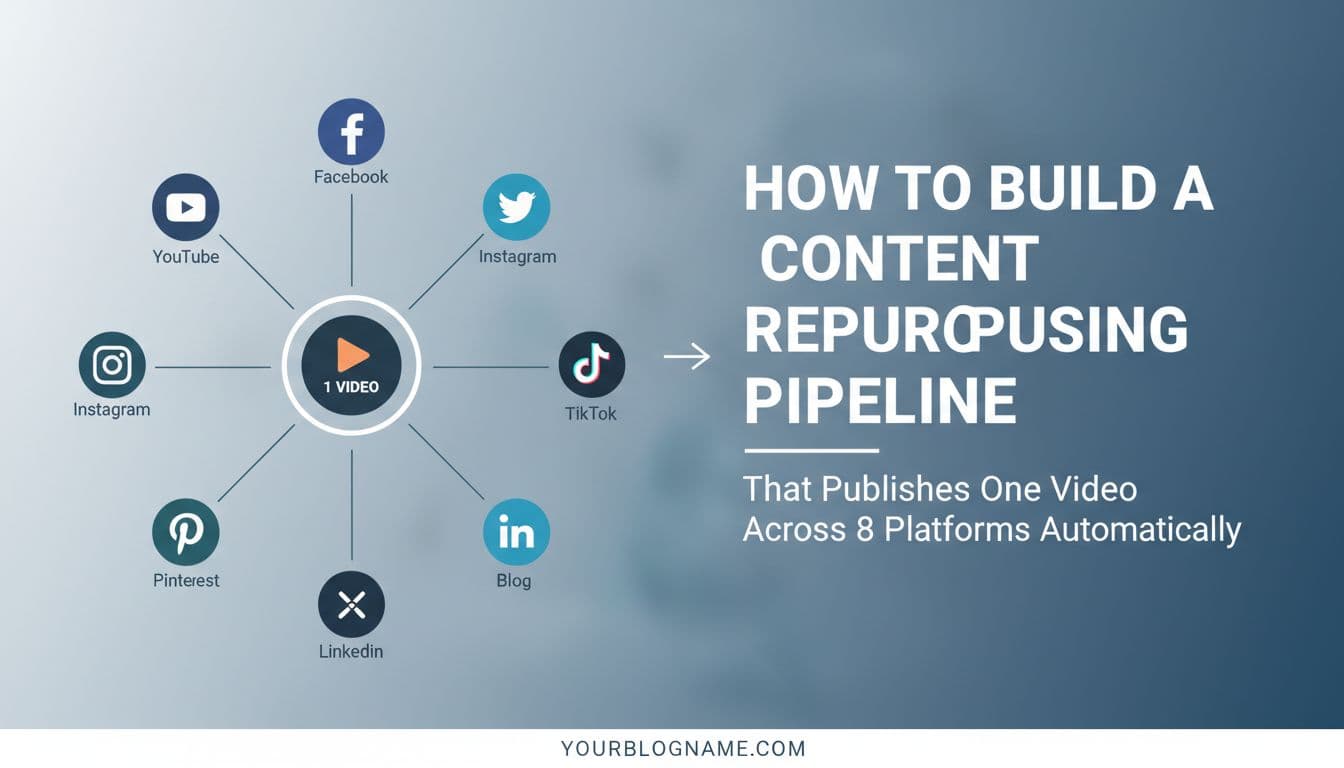
How to Build a Content Repurposing Pipeline That Publishes One Video Across 8 Platforms Automatically
You film one video. Maybe it's a 10-minute YouTube tutorial, a product demo, or a behind-the-scenes walkthrough. Then you spend the next three hours manually cutting clips, rewriting captions, adjusting aspect ratios, and scheduling posts one platform at a time. By the time you're done, the momentum is gone and you're too burned out to film the next one. There's a better way. One video can fuel your entire content calendar across Instagram, TikTok, LinkedIn, YouTube Shorts, Facebook, and X without you touching each post individually. The key isn't just repurposing — it's building an autonomous pipeline that does the adapting, scheduling, and analyzing for you. This guide breaks down exactly how to set that up, what platform-specific optimization actually looks like, and why AI agents are the missing piece most creators overlook.
11 min read
Ready to never miss a post again?
Tell Aidelly what to post. It drafts, schedules, and publishes across 11 platforms while you focus on your business.


Trusted by business owners