Content Creator Burnout Is a Scheduling Problem: Here's How to Fix It With Automation
Most creators assume burnout means they've lost their passion. But when you dig into what's actually draining them, it's rarely the filming, writing, or designing. It's the posting. The logging in, the reformatting, the guessing about timing, the context switching between six different apps before 9am. That's the part that grinds people down. This article breaks down why creator burnout is fundamentally an operations problem, not a creativity problem, and what you can actually do about it. You'll learn how agentic social media automation removes the repetitive work that causes burnout, how batching content in focused blocks protects your creative energy, and how tools like visual content calendars and cross-platform analytics help you stay consistent without staying stressed. If you're tired of dreading the posting part of your job, this one is for you.

Wilzer Jean-Baptiste
11 min read
You made something good. A video, a post, a campaign idea that actually excited you. Then you spent the next two hours formatting it for four platforms, guessing at posting times, rewriting the same caption three different ways, and logging into apps you forgot you had. By the time it went live, the excitement was gone. That's not a passion problem. That's a workflow problem. And it's the real reason creators burn out.
The Real Reason Creators Burn Out
Most creators think burnout means they've lost the love for what they do. They blame themselves. They take a break, come back, and then hit the same wall again two months later. Because the problem was never passion. The problem was the workflow sitting underneath all the creative work.
Burnout Lives in the Logistics, Not the Creative Work
Here's what the research actually shows. Occupational health studies on burnout consistently point to one trigger above others: constant task-switching. Not deep work. Not hard work. Switching. And for creators, that switching happens at the logistics layer, not the creative one.
You can spend a focused two hours filming a great video and feel energized. Then you spend the next three hours figuring out where to post it, what to caption it on each platform, what size the thumbnail needs to be, whether 3pm or 7pm is better for Instagram versus LinkedIn, and whether you remembered to log into TikTok on your laptop or your phone. By the time the post goes live, you're exhausted. And you haven't made anything new in hours.
A 2024 survey of full-time content creators found that more than 60% reported their most draining tasks were publishing-related, not production-related. The invisible admin work of posting, the platform-hopping, the micro-decisions, that's where the energy goes. When people say they're burned out from social media, they usually mean they're burned out from the operational grind around social media. Those are two very different problems with very different solutions. Recognizing this distinction matters because it changes what you do about it. Taking a week off doesn't fix a broken workflow. Building a better one does.
Manual Posting Is a Decision Fatigue Machine
Think about what actually happens when you post manually. You have one piece of content. A reel, a blog post, a product photo. Something you made. Now watch it multiply into a dozen micro-tasks before it ever reaches an audience.
You need to write a caption for Instagram that's conversational and uses hashtags. Then rewrite it for LinkedIn because that audience expects something more professional. Then trim it to 280 characters for X. Then figure out if TikTok wants a different hook in the first three seconds. Then resize the image for each platform's preferred dimensions. Then decide whether to post now or schedule it, and if you schedule it, figure out the best time to post for each platform individually. Then log into each app or tab. Then upload. Then check that it posted correctly.
That's not one task. That's eight to twelve tasks that all came from one idea. Multiply that by five posts a week across four platforms and you're looking at forty to sixty micro-decisions every single week that have nothing to do with creativity. Decision fatigue is real. The more small choices you make, the worse your judgment gets on the ones that actually matter. Manual posting doesn't just waste time. It depletes the cognitive resources you need for the creative work that makes your content worth posting in the first place.
Burnout Signals Are Operational, Not Just Emotional
There's a specific feeling creators describe before they go fully dark on social media. It's not that they hate their niche. It's not that they've run out of ideas. It's that they dread the posting more than they look forward to the creating. That shift, from dreading the logistics to dreading the whole thing, is how operational burnout becomes emotional burnout.
Watch for these signals in yourself or your team. You're avoiding posting because you don't want to deal with the formatting. You're posting inconsistently not because you lack content but because the process feels too heavy to start. You're spending more time managing the act of publishing than you are thinking about what to say. You feel relief when you skip a posting day, not guilt.
These are workflow problems wearing the costume of motivation problems. A creator who loves what they make but hates the process of distributing it doesn't need a mindset shift. They need a better system. And that's a much more solvable problem. The sooner you recognize burnout as operational, the sooner you can do something practical about it instead of waiting for your motivation to come back on its own.
What Automation Actually Fixes
Automation gets a bad reputation in creative circles because people assume it means generic, robotic content that sounds like it was written by a committee. That's not what good automation does. Good automation removes the repetitive work so you can do more of the human work.
Automation Should Handle the 80%, Not Replace the 20%
Here's a useful way to think about your workflow. Roughly 80% of what goes into publishing a post is repeatable and mechanical. Formatting captions for different platforms. Choosing optimal posting times based on past performance data. Resizing assets. Scheduling across multiple channels. Adding hashtags. Queuing content in the right order. None of that requires your creative judgment. It requires consistency and attention to detail, which are things automation does better than humans anyway.
The other 20% is where you actually live. Your perspective on a topic. The specific story from your week that makes a post feel real. The creative instinct that says this angle is more interesting than that one. The relationship you have with your audience that shapes your tone. That 20% cannot be automated and shouldn't be.
The goal of a good automation setup is to protect that 20% by offloading the 80% completely. When creators say they want to use AI for social media, the most valuable application isn't generating all their content. It's removing the operational weight so they can spend more time on the parts only they can do. That's the difference between automation that helps and automation that makes your feed feel hollow.
Agentic Workflows Go Further Than Basic Auto-Scheduling
Old-school social media schedulers were basically digital queues. You wrote the post, uploaded the image, picked a time, and hit schedule. It saved you from logging in at 7am, but it didn't save you from any of the work that happened before that. You still wrote every caption, made every formatting decision, and managed every platform separately. The scheduler just held the post until the clock hit the right time.
Agentic social media workflows are a different category entirely. An agentic AI system doesn't just hold your content. It can help plan what to post based on your goals, draft platform-specific versions of your content with your brand voice, suggest optimal timing based on real performance data, and publish across all your channels without you touching each one individually.
Aidelly's agentic workflows let AI agents handle the end-to-end process from drafting to scheduling to publishing, so you're not just saving the last step. You're removing most of the steps in between. This matters for burnout because the exhaustion isn't usually at the moment of clicking publish. It's in the twenty minutes of setup before that click, multiplied across every post, every week, indefinitely. Agentic automation cuts into that time in a meaningful way, and that's what makes it different from every scheduler you've tried before.
Visual Calendars and Approval Gates Give You Control Back
One of the most underrated sources of creator anxiety is the feeling that things could go live at any moment without you being ready. That low-grade stress of not knowing what's scheduled, when it's going out, or whether it's been reviewed is its own kind of drain.
A visual content calendar fixes the visibility problem. When you can see your entire week or month laid out, you stop carrying your content plan in your head. You can see gaps, spot imbalances, and plan ahead without a spreadsheet or a sticky note system held together with hope. Approval workflows add another layer of calm, especially for teams. When nothing goes live until a human has reviewed and signed off, you remove the panic of accidental posts and the anxiety of wondering if something went out wrong.
Aidelly's approval gates let team members review content before it publishes, which means creators can batch their work, hand it off, and trust the process without babysitting every post. That combination of visibility and control, seeing what's coming and knowing it won't go live until it's ready, is one of the most practical ways to reduce the background stress that contributes to burnout over time. You stop reacting and start planning, and that shift alone changes how the whole thing feels.
The Practical System That Prevents Burnout
Knowing that automation helps is one thing. Building a workflow that actually sticks is another. Here's how the pieces fit together into something you can use starting this week.
Batching Plus Automation Is the Burnout Antidote
Batching is the practice of doing similar work together in focused blocks instead of spreading it across every day. Instead of filming one video on Monday, writing one caption on Tuesday, and posting one thing on Wednesday, you film four videos in one session, write all your captions in one sitting, and then let automation handle the publishing for the rest of the week.
The reason batching works so well for creators is that context switching is expensive. Every time you stop a creative task to do an operational one, it takes your brain time to get back into the creative state. Batching eliminates most of that switching. You go deep on creation, then you go deep on scheduling, and then you're done. Automation handles everything after that.
The combination is powerful because neither one works as well alone. Batching without automation still means you have to log in and post manually every day. Automation without batching means you're still making small content decisions constantly. Together, they create a rhythm where you protect large blocks of creative time and then trust the system to distribute what you made. Coaches, e-commerce brands, and agencies using this approach consistently report that they're producing more content with less daily effort, not because they're working harder but because they stopped interrupting themselves.
Analytics Should Close the Loop Without Adding Work
Here's a trap a lot of creators fall into. They know they should be tracking performance, so they open five different analytics dashboards, spend an hour pulling numbers, build a spreadsheet, and then feel too tired to do anything with the data. The analytics process becomes another source of burnout instead of a solution to it.
Good cross-platform analytics should tell you what worked and what didn't in one place, without you having to aggregate anything manually. The goal isn't a comprehensive report. It's a clear signal. Which posts got the most reach? Which format drove the most saves or clicks? Which platform is actually moving the needle for your goals right now?
When you have that information surfaced automatically, you make better decisions in less time. You stop guessing and grinding. You double down on what's already working. Aidelly's cross-platform analytics pull performance data from every channel into one dashboard, so you're not logging into Instagram Insights, then LinkedIn Analytics, then TikTok Studio separately. You see the full picture in one place and spend your energy acting on it instead of collecting it. That's the difference between analytics that help and analytics that just add to your workload.
Build the System Once, Then Protect It
The hardest part of fixing a burnout-inducing workflow isn't setting up the tools. It's protecting the system once it's running. Creators have a tendency to slip back into manual habits when they're in a rush or when something feels urgent. A post needs to go out right now, so you skip the batch and just publish it manually. Then you do it again the next day. Then the system starts to erode.
The fix is treating your workflow like a non-negotiable. Batch days go on the calendar like meetings. The approval process runs before anything goes live, even when you're in a hurry. Analytics reviews happen once a week, not every day. When you build the system and then protect it from the exceptions that chip away at it, you create something that reduces burnout over time instead of just delaying it.
The goal isn't a perfect content machine. It's a sustainable one that you can run without dreading Monday morning. Start with one change: move from daily manual posting to a weekly batch-and-schedule session. See how the week feels. Then add automation for the formatting and publishing layer. Then let analytics tell you what to make more of. Each step removes friction. Each step gives you back a little more of the energy you came here to spend on creating.
Burnout among creators is an operations problem. The drain comes from the invisible labor of posting, the constant context switching, and the dozens of micro-decisions that pile up between an idea and a published post. When you hand the repetitive 80% to automation and protect your creative time through batching, visual planning, and smart analytics, you stop grinding and start building something sustainable. The right tools don't just save time. They change how the whole thing feels. If posting has started to feel heavier than creating, that's your signal that the workflow needs fixing, not the passion. Aidelly was built specifically to remove that operational weight, so you can spend your energy on the work only you can do.
Creator burnout does not start with a blank page. It starts with the tenth micro-task between a good idea and a published post. Aidelly's agentic workflows handle that whole chain for you, from drafting and scheduling to performance analysis, so you spend less time managing platforms and more time making the work only you can make. If your workflow is the thing wearing you out, visit aidelly.ai and let the agents take the logistics off your plate.
Compare Social Scheduling Tools
Evaluating software for your content workflow? Use our buyer guides and comparisons to compare scheduling, approvals, analytics, and AI workflow fit.
Share this article
Related Articles

How to Build a Done-For-You Social Media Package as a Freelancer Using AI
Most freelance social media managers are stuck in a trap. They charge by the hour, manually post for each client, chase approvals over email, and still can't figure out why they're exhausted at $4K a month. The problem isn't effort. It's the model. Done-for-you social media packages built on agentic AI workflows let you flip that model completely. Instead of selling your time, you sell outcomes. Instead of manually managing every account, AI agents handle content creation, scheduling, and performance tracking while you focus on strategy and client relationships. This guide breaks down exactly how to build a done-for-you social media service that can generate $5K to $15K per client monthly, without hiring a team, without burning out, and without competing on price against someone who charges $15 an hour.
Jul 11, 2026
Read more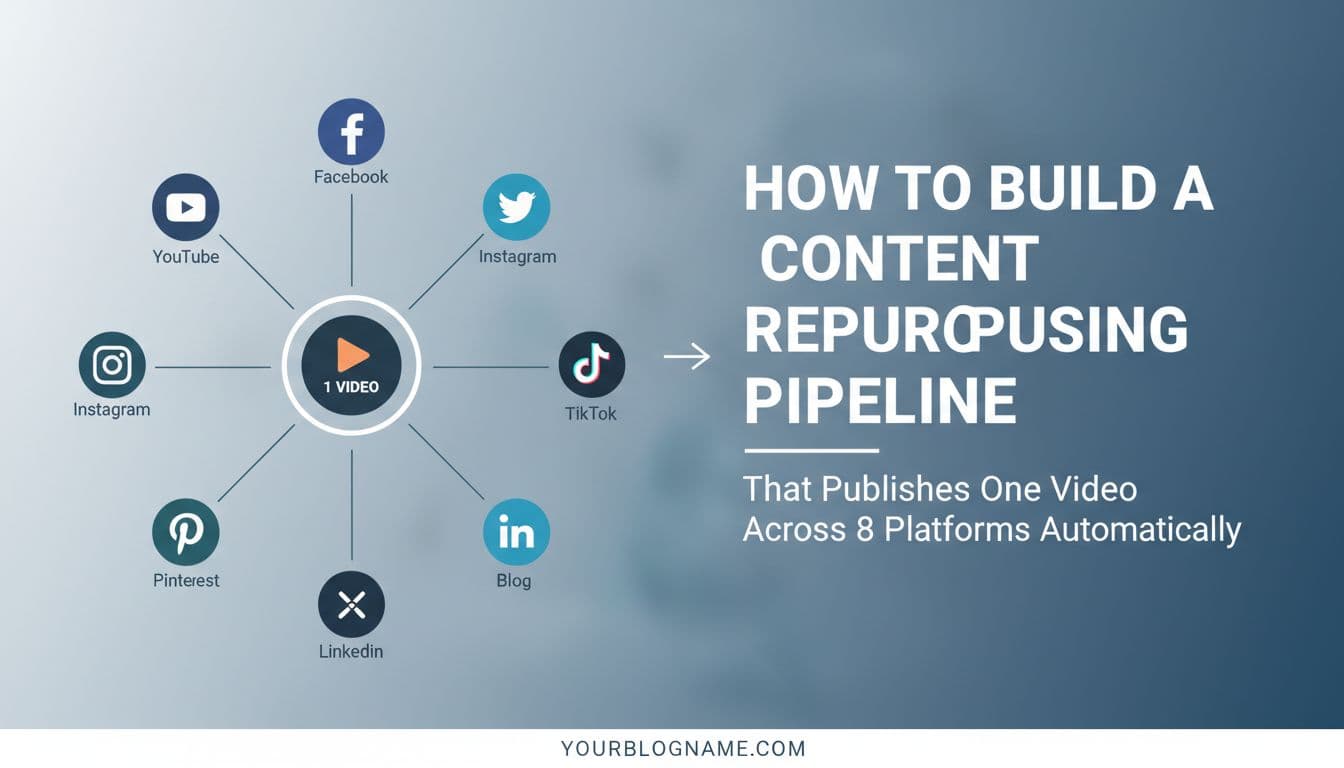
How to Build a Content Repurposing Pipeline That Publishes One Video Across 8 Platforms Automatically
You film one video. Maybe it's a 10-minute YouTube tutorial, a product demo, or a behind-the-scenes walkthrough. Then you spend the next three hours manually cutting clips, rewriting captions, adjusting aspect ratios, and scheduling posts one platform at a time. By the time you're done, the momentum is gone and you're too burned out to film the next one. There's a better way. One video can fuel your entire content calendar across Instagram, TikTok, LinkedIn, YouTube Shorts, Facebook, and X without you touching each post individually. The key isn't just repurposing — it's building an autonomous pipeline that does the adapting, scheduling, and analyzing for you. This guide breaks down exactly how to set that up, what platform-specific optimization actually looks like, and why AI agents are the missing piece most creators overlook.
Aug 26, 2026
Read more
How to Use Cross-Platform Analytics to Kill Underperforming Content Fast
Most marketing teams and solopreneurs post content, check a few numbers, and move on. But without a clear view across every platform, you're flying blind. You might be pouring time and budget into posts that nobody cares about while your best-performing content goes unnoticed on a channel you barely check. Cross-platform analytics changes that. It gives you a unified picture of what's working, what's dead weight, and where to focus next. This guide breaks down how to spot underperforming content fast, make smarter kill-or-keep decisions, and redirect your energy toward content that actually drives results. Whether you manage one brand or ten, the teams that win in 2026 are the ones who move quickly on data, not gut feeling.
Sep 5, 2026
Read moreReady to never miss a post again?
Tell Aidelly what to post. It drafts, schedules, and publishes across 9 platforms while you focus on your business.