Developers
Autonomous Social Media Agents: A Technical Buyer's Guide for Engineering Teams in 2026
Engineering teams at SaaS companies and startups spend more time on social media than they should. Not because they want to, but because someone has to keep the channels alive while the product team ships features. In 2026, that problem has a real technical solution: autonomous social media agents. This guide breaks down how agentic AI works as developer infrastructure, how REST APIs and MCP Server integrations plug into your existing stack, and what it actually looks like to hand off content creation, scheduling, and analytics to an AI agent that runs without babysitting. If you treat email delivery and payment processing as solved infrastructure problems, social media publishing deserves the same treatment. Here is what engineering teams need to know before they build or buy.

By Wilzer Jean-Baptiste
Published 11 min read
Your engineering team is good at shipping software. They're probably not great at maintaining a consistent social media presence, and that's not a criticism. It's just not what they were hired to do. But in 2026, if your company doesn't have a dedicated marketing team, someone on the engineering side ends up owning social media by default. And that someone is losing hours every week to a problem that should have been automated a long time ago.
Autonomous social media agents change this. Not by replacing marketers, but by treating social media publishing the same way your team already treats email delivery or payment processing: as solved infrastructure. You define the parameters, connect the tools, and the agent handles the rest. This guide is for engineering teams who want to understand how that actually works, what the integration looks like, and how to evaluate whether to build it or buy it.
Why Engineering Teams Have a Social Media Problem
Your team is building a product. Somewhere between sprint planning and code reviews, someone remembers that the company LinkedIn hasn't posted in three weeks. So a developer writes a quick post, an engineer approves it, and forty minutes of focused work disappear into the void.
This happens at almost every SaaS company, startup, and agency that doesn't have a dedicated marketing team. Social media isn't anyone's job, so it becomes everyone's problem. And the cost isn't just time. It's context switching. It's the mental overhead of going from debugging a database query to writing a caption for Instagram and then trying to get back into flow state.
The good news is that in 2026, autonomous social media agents solve this at the infrastructure level. Not as a productivity hack. As actual developer infrastructure, the same way you stopped writing your own email delivery system and started using SendGrid, or stopped building payment flows from scratch and started using Stripe.
Social Media as Toil, Not Strategy
Site Reliability Engineers have a word for repetitive, manual work that keeps systems running but doesn't move anything forward: toil. Social media management, when it falls on an engineering team, is almost pure toil. You're not making strategic decisions. You're copying and pasting content into five different platform dashboards, reformatting images, remembering character limits, and checking whether the post went live.
Toil is the enemy of engineering velocity. Google's SRE handbook recommends keeping toil below 50% of any engineer's time. Social media, when it's unmanaged, punches above its weight in toil generation. A single platform launch or product update can eat hours of manual posting work across Instagram, LinkedIn, TikTok, YouTube, Facebook, and X. Multiply that by weekly cadence and you have a real drain on your team's capacity. The answer isn't to hire a social media manager for every small team. The answer is to automate the toil away.
The Infrastructure Analogy That Changes How You Think About This
Think about how your team handles transactional email. You don't write SMTP servers. You don't manage deliverability. You call an API, pass a payload, and the email goes out. The infrastructure handles the rest: retries, bounce handling, analytics, compliance. You solved that problem once and moved on.
Social media publishing can work the same way. Define your brand voice, connect your accounts, and let an agent handle the rest. Content gets created, optimized for each platform, scheduled at the right time, and published without anyone on your team touching it. Performance data comes back through the same API so you can pipe it into your dashboards or feed it back into the agent loop. Social media stops being a marketing task and becomes a solved infrastructure problem. That's the shift worth making.
The Technical Architecture of Autonomous Social Media Agents
Understanding how these agents actually work helps you evaluate whether to build or buy, and how to integrate them into your existing stack. Autonomous social media agents aren't just scheduled scripts. They're multi-step AI workflows that handle decision-making at each stage of the content lifecycle.
How Agentic Workflows Handle the Full Content Lifecycle
A well-designed agentic social media workflow doesn't just automate posting. It handles the entire pipeline from idea to analysis without human intervention at each step.
The agent starts with content ideation. It pulls from your product updates, blog RSS feed, changelog, or a set of topic guidelines you define once. It generates draft content tailored to each platform. A LinkedIn post about a new feature reads differently than a TikTok script or an Instagram caption for the same announcement. The agent knows this and writes accordingly.
Next comes platform-specific optimization. Character limits, hashtag strategy, image dimensions, video specs, and engagement patterns vary across Instagram, TikTok, LinkedIn, YouTube, Facebook, and X. The agent applies these constraints automatically.
Then scheduling. The agent analyzes historical performance data and audience activity patterns to pick the best time to post on each platform. Not a generic best-practice time from a blog post. Your actual audience data.
Finally, performance analysis feeds back into the loop. Engagement rates, reach, click-through data, and follower growth get tracked and used to improve future content decisions. The agent gets smarter over time without anyone manually reviewing reports.
Aidelly's agentic workflows are built on exactly this model. The platform handles end-to-end content operations autonomously, which means your team defines the parameters once and the agent runs the workflow continuously.
The result is real: engineering teams that implement autonomous social media agents reduce manual content creation and scheduling work by 70 to 80 percent. That's not a marginal improvement. A developer who was spending four to six hours a week on social media tasks redirects that time to shipping features. At team scale, that compounds fast. A five-person engineering team reclaims 20 to 30 hours per week that were going to social media toil. Those hours go back into the product roadmap, architecture decisions, and the work that actually moves the company forward.
REST API Architecture for Programmatic Publishing
If you want to build social media publishing into your own product or internal tooling, a REST API is the right integration point. The technical case for a unified cross-platform API is straightforward: managing separate integrations for six different social platforms is a maintenance nightmare.
Each platform has its own authentication flow, rate limits, media handling requirements, error codes, and API versioning schedule. Instagram's Graph API behaves differently from LinkedIn's API. TikTok's content API has different video requirements than YouTube's. X has its own rate limiting logic. If you build and maintain all of these integrations yourself, you're running a small social media API team inside your company.
A unified REST API abstracts all of that. You send one request with your content payload, specify the target platforms, and the API handles the rest. Authentication, media transcoding, platform-specific formatting, retry logic, and delivery confirmation all happen under the hood.
Aidelly's REST API gives developers exactly this. One endpoint to publish across Instagram, TikTok, LinkedIn, YouTube, Facebook, and X programmatically. You can trigger posts from your CI/CD pipeline when you ship a release, from your internal admin tools, or from an AI agent running in your infrastructure. The API also exposes analytics endpoints so you can pull performance data back into your own dashboards or feed it into downstream systems.
You eliminate six separate integrations, six separate authentication systems, and six separate failure modes. You replace them with one well-documented API that your team learns once and uses everywhere. That's the real win here.
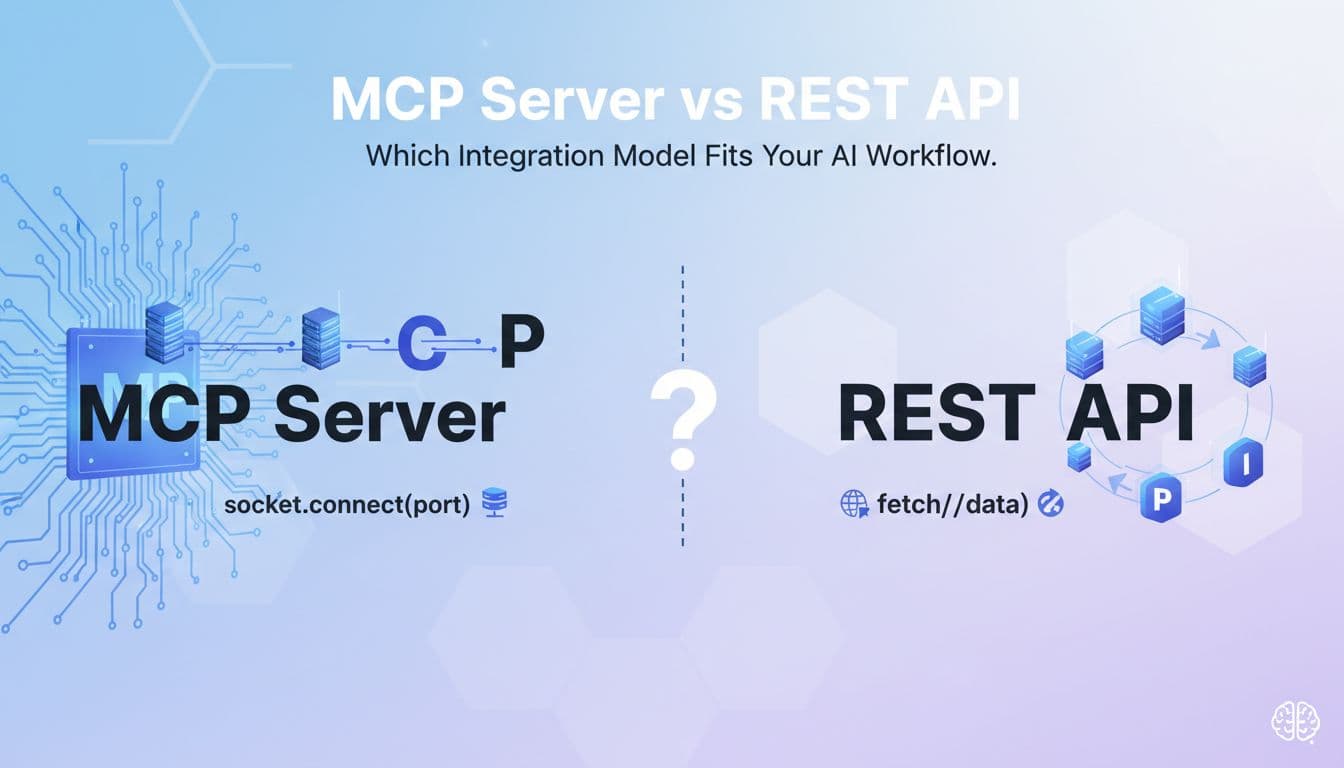
MCP Server Integration for AI-Native Workflows
The Model Context Protocol is changing how AI assistants interact with external services. If your team uses Claude, ChatGPT, or Cursor as part of your development workflow, MCP integrations let those assistants take actions in external systems, not just generate text.
For social media, this means your AI assistant can draft a post, check your content calendar, schedule content, and retrieve analytics without you leaving your development environment. You describe what you want in natural language and the assistant handles the API calls through the MCP server.
Aidelly's MCP Server makes this possible for social media publishing. Connect it to your AI assistant once, and you can manage your entire social media operation through conversational prompts. Ask Claude to draft three LinkedIn posts about your new API release, review them in the chat, approve the ones you like, and schedule them. The whole workflow happens inside the tool you're already using.
For developers building AI agent applications, the MCP integration is especially valuable. If you're building an agent that monitors your product's performance and generates reports, you can extend that agent to also publish social updates when key milestones are hit. The social media publishing layer becomes part of your agent's capability set without building a custom integration from scratch.
Brand Consistency and Quality Control at Agent Scale
One of the real concerns engineering teams have about autonomous publishing is quality. If an agent is posting on behalf of your company across six platforms, how do you make sure the content sounds like you and not like a generic AI output? And how do you catch problems before they go live?
Brand Voice Management as Code
Brand voice management in an agentic system works like configuration. You define your brand's tone, style, vocabulary, and content guidelines once. The agent uses that configuration as a constraint on every piece of content it generates. Think of it like a linter for your content. The rules run automatically on every output before anything gets scheduled.
This matters more than most engineering teams realize. Inconsistent brand voice across platforms erodes trust with your audience over time. A LinkedIn post that sounds formal and polished followed by an Instagram caption that reads like it was written by a different company creates cognitive dissonance. Customers notice even if they can't articulate why.
Aidelly's brand voice and asset management system stores your guidelines, approved media assets, and content templates in one place. Every agent-generated post draws from these stored parameters. You're not hoping the AI gets the tone right. You're defining the tone as a system constraint and the agent operates within it.
Asset libraries work the same way. Approved logos, product screenshots, brand images, and video assets are stored centrally. When the agent needs visual content, it pulls from approved assets rather than generating or sourcing images ad hoc. This keeps your visual identity consistent without requiring manual review of every post.
The downstream effect is significant. When autonomous agents publish on-brand content consistently, you cut compliance and quality review cycles. Instead of a human reviewing every post before it goes live, you review the brand configuration once and trust the system to apply it. Spot checks replace full reviews. Your approval workflow becomes an exception handler instead of a bottleneck, and your team stops being the last line of defense on every caption.
Approval Workflows as Safety Gates
Even with strong brand voice configuration, some content needs a human review before it goes live. Product announcements, sensitive topics, regulatory-adjacent content, and high-stakes campaigns all benefit from a review gate. The key is making that gate lightweight enough that it doesn't become the bottleneck that kills your automation.
Good approval workflows in an agentic system work like pull request reviews. The agent generates the content and queues it for approval. A team member gets a notification, reviews the draft in a simple interface, and approves or requests changes. The agent handles scheduling and publishing after approval. The human is in the loop only where it matters, not on every routine post.
This model works well for engineering teams because it mirrors workflows they already understand. Code review exists not because developers can't write code, but because a second set of eyes catches things before they reach production. Content approval works the same way. You're not reviewing everything. You're reviewing the things that carry real risk. Everything else runs automatically.
Analytics Feedback Loops for Continuous Improvement
An autonomous agent that doesn't learn from performance data is just a scheduler with extra steps. The real value of agentic social media comes from closing the feedback loop. Performance data from published content should feed back into the agent's decision-making so it improves over time.
Cross-platform analytics give you a unified view of what's working. Instead of logging into six different platform dashboards and manually comparing numbers, you get engagement rates, reach, follower growth, and click-through data in one place. You can see that your LinkedIn technical content outperforms your product updates, or that Instagram posts published on Tuesday mornings get 40% more engagement than Friday afternoon posts. That data informs what the agent creates and when it schedules.
When analytics are exposed through an API, you can pipe this data into your existing observability stack. Feed it into Datadog, Grafana, or your internal analytics platform alongside your product metrics. Social media performance becomes a first-class metric in your system, not a separate thing you check in a separate tool once a month.
This is where autonomous social media management stops being a convenience and starts being a real operational advantage. Your agent runs a continuous experiment, publishes content, measures results, and adjusts strategy. You get compounding improvements without compounding manual effort. And your engineering team stays focused on the product instead of the posting schedule.
Autonomous social media agents are developer infrastructure now. The REST API, the MCP Server integration, the brand voice configuration, the approval workflows and analytics feedback loops: these are the building blocks of a social media operation that runs without pulling your engineers away from the work that matters. Engineering teams that treat social media as a solved infrastructure problem stop losing hours to content toil and start compounding the time they get back into product development. The right platform makes this straightforward to set up and maintain, whether you're a five-person startup or a scaling SaaS team with a complex content operation. If your team is ready to stop managing social media manually and start running it like infrastructure, Aidelly is built for exactly that.
Your engineering team didn't sign up to manage social media. With agentic workflows, you can hand off the entire process—from content creation and platform optimization to scheduling and performance analysis—to AI agents that work while you ship. Treat social media publishing like the solved infrastructure problem it should be. See how Aidelly helps teams reclaim that time at aidelly.ai.
Compare social scheduling tools
Evaluating software for your content workflow? Use our buyer guides and comparisons to compare scheduling, approvals, analytics, and AI workflow fit.