Creators
How to Build a Content Repurposing System That Works Across 6 Platforms Automatically
Most content creators are stuck in a loop. They film a video, write a caption, post it, then start over from scratch on the next platform. By the time they've reformatted the same piece of content for Instagram, LinkedIn, TikTok, YouTube, Facebook, and X, an hour is gone and the week hasn't even started. There's a better way to think about this. Instead of treating repurposing as a task, you can build it as a system. One piece of pillar content goes in. Six platform-native posts come out. They get scheduled at the right time, in your brand voice, without you touching each one manually. This article walks you through exactly how to build that pipeline, what makes it actually work across all six platforms, and how agentic AI is turning what used to be a full-time job into something that mostly runs itself.

By Wilzer Jean-Baptiste
Published 11 min read
You record a podcast. You write a blog post. You film a video. And then you spend the next three hours figuring out how to turn that one piece of content into something that works on Instagram, TikTok, LinkedIn, YouTube, Facebook, and X. By the time you're done, you've reformatted the same idea six times, posted it at whatever time felt right, and already fallen behind on next week's content.
That's not a content strategy. That's a content treadmill.
The creators and small teams who are winning on multiple platforms in 2026 aren't working harder. They've built a system. One piece of pillar content goes in. Six platform-native posts come out, scheduled at the right time, written in the right format, and tuned to the right audience. The system runs. They focus on the next big idea.
This article shows you how to build that system from scratch, what makes it actually work across all six major platforms, and why agentic AI is the piece that turns a faster workflow into a machine that improves itself over time.
Why Most Content Repurposing Breaks Down Before It Even Starts
The Copy-Paste Trap
Here's what most people do when they try to repurpose content. They take a LinkedIn post, swap out a few words, add some hashtags, and call it an Instagram caption. Then they paste the same thing into Facebook. Maybe they trim it for X. And they wonder why nothing performs.
Most content repurposing fails because people manually reformat the same post for each platform instead of building a system that adapts content to platform-specific formats, audiences, and optimal posting times from a single source asset. That distinction matters more than most people realize. Reformatting is cosmetic. A real system is structural.
When you manually copy-paste content across platforms, you're not repurposing. You're just resizing. The audience on TikTok is not the same as the audience on LinkedIn. A 2,200-character LinkedIn post that performs well with B2B professionals will land flat on TikTok, where a 15-second hook decides everything. The format, the tone, the call to action, the hashtag strategy — all of it needs to shift based on where the content lives. Doing that manually for every post, every week, is what burns people out. It's also why most repurposing advice doesn't actually help. It tells you what to do but not how to stop doing it yourself. The fix isn't working faster. It's building a machine that does the adapting for you.
What a Real Repurposing System Actually Looks Like
A working repurposing system starts with one pillar piece of content — a long video, a podcast episode, or a blog post — and uses AI to extract, reformat, and schedule platform-native versions automatically. Not just copy-paste with different image crops. The AI reads the source material, pulls out the core ideas, and rebuilds each post from the ground up with the right format, length, tone, and structure for each platform.
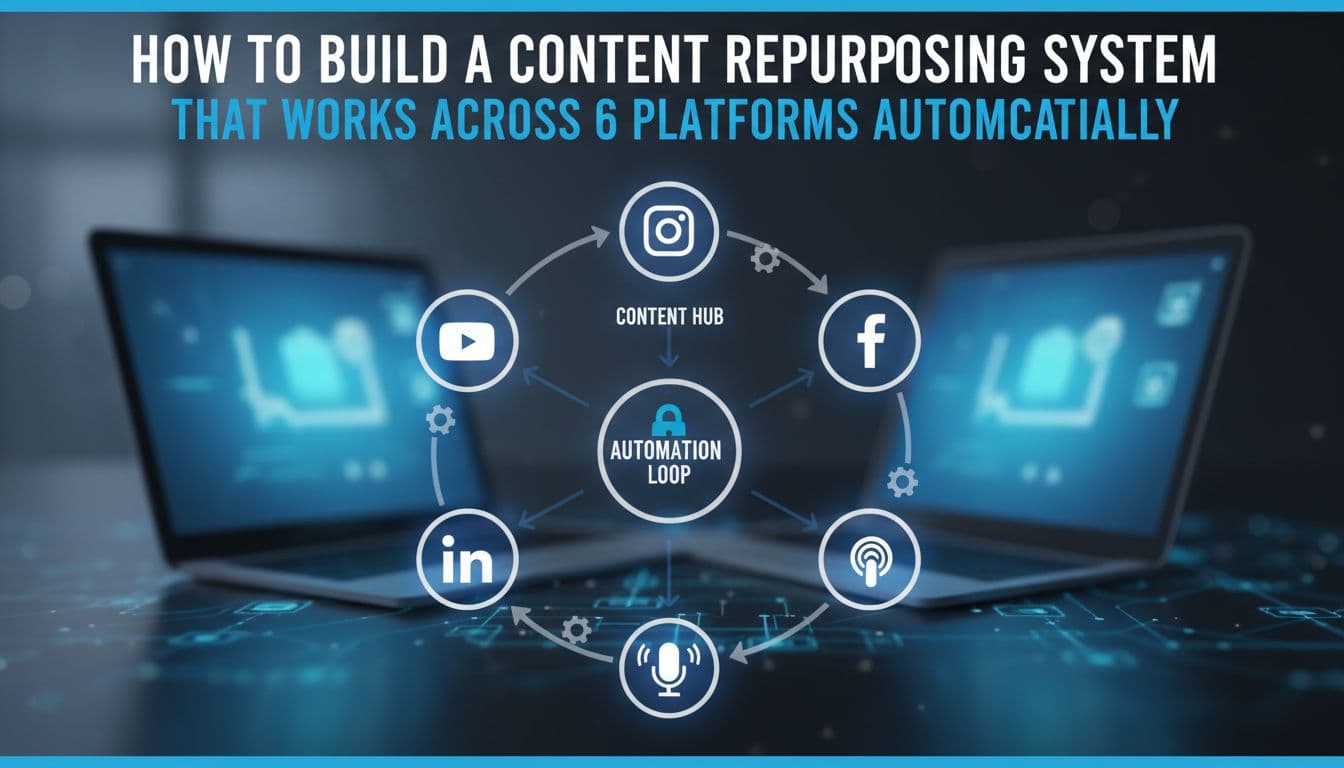
Think of it like a content factory with one input and six outputs. You record a 20-minute podcast episode. That episode becomes a short-form TikTok clip with a punchy hook. It becomes a LinkedIn article that expands on one insight. It becomes an Instagram carousel that breaks down the key takeaways visually. It becomes a YouTube Short. It becomes a Facebook post with a community question. It becomes a thread on X that drives clicks back to the full episode.
None of those outputs are the same. They share the same source material, but each one is built for the platform it lives on. That's the difference between a repurposing system and a copy-paste workflow. The pillar content approach also solves a problem most creators don't talk about: content idea fatigue. When every post has to be a brand-new idea, you run out fast. When you're extracting multiple platform-native posts from one strong piece of content, a single recording session can fuel an entire week of publishing across six channels.
The Platform Variables You Can't Ignore
Each of the six major platforms has different content formats, character limits, hashtag norms, and peak engagement windows. True automation has to account for all of these variables at the same time, not just one or two.
Instagram rewards visual storytelling, carousels, and Reels. Captions can run up to 2,200 characters, but most high-performing posts front-load the value in the first line. Three to five targeted hashtags outperform thirty generic ones. Peak engagement for most accounts sits around 6 to 9 AM and 6 to 9 PM in the audience's local time zone.
TikTok is a discovery engine. The hook in the first two seconds determines whether someone keeps watching. Captions are short. Trending audio matters. LinkedIn rewards depth and a clear opinion. Long-form posts consistently outperform short ones. Hashtags are used sparingly, three to five max. Tuesday through Thursday mornings are the sweet spot for B2B reach. YouTube Shorts live and die by the first frame. Facebook's organic reach is lower, so posts that spark comments and shares perform best. X rewards brevity, wit, and threads that build on a single strong idea. A manual workflow can't hold all of that in mind at once. A well-built AI system can, and it applies those rules automatically every time a post goes out.
Building the Pipeline: From Pillar Content to Six Platform Posts
Setting Up Your Pillar Content Strategy
The foundation of any good repurposing system is the pillar content itself. This is the one asset that everything else gets built from. It needs to be long enough and rich enough to contain multiple angles, insights, or moments worth pulling out. A 20-minute podcast, a 1,500-word blog post, or a long-form YouTube video all work well as pillars.
The key is thinking about your pillar content as raw material, not a finished product. When you record a podcast episode, you're not just making a podcast. You're generating the source material for an entire week of cross-platform content. That mental shift changes how you approach the recording. You start thinking about quotable moments, visual breakdowns, strong one-liners, and story beats that can stand alone on a short-form platform.
Once you have that pillar asset, the system takes over. AI tools can now ingest a transcript, a URL, or a video file and extract the core ideas automatically. From there, the repurposing pipeline drafts platform-native versions of each post, applies your brand voice, formats them correctly for each channel, and queues them for scheduling. You review and approve. The system publishes. That's not a fantasy. That's what tools like Aidelly's AI Chat Workspace and agentic workflows are doing in 2026 for creators and small teams who can't afford to hire a full content department.
How AI Handles the Full Repurposing Pipeline
AI-powered scheduling tools can now handle the full repurposing pipeline end-to-end: drafting captions, applying brand voice, picking the best time to post, and publishing without a human touching each step. This is a meaningful shift from what scheduling tools could do even two years ago.
Earlier tools let you write a post once and push it to multiple platforms. That was useful but limited. You still wrote every caption. You still picked every posting time. You still reformatted every asset. The tool just handled the publishing button. What's different now is that the AI handles the drafting layer. It reads your source content, understands your brand voice from stored guidelines, and generates a LinkedIn post that sounds like you, an Instagram caption that fits the platform's style, and a TikTok script that opens with a hook strong enough to stop the scroll.
It also knows that your LinkedIn audience engages most on Tuesday mornings and your Instagram audience is most active on Thursday evenings. So it schedules accordingly, without you making that call manually for every post. The brand voice piece is especially important for small businesses and solopreneurs. One of the biggest fears people have about AI-generated content is that it won't sound like them. When your brand voice guidelines are stored in the system and applied consistently across every draft, that fear goes away. Aidelly's Brand Voice and Asset Management feature handles exactly this. You store your tone, language preferences, audience context, and visual assets once. Every post the system generates pulls from that foundation.
Scheduling Across Six Platforms Without Losing Your Mind
Once the drafts are ready, the scheduling layer kicks in. This is where most people still lose time, even with AI drafting help. They have six platforms, each with different optimal posting windows, and they're manually picking times for every post, every week.
A real automation system handles this differently. It connects your content calendar to platform-specific performance data and uses that data to pick posting times automatically. If your Instagram Reels consistently get more views when posted at 7 AM on weekdays, the system learns that and schedules accordingly. If your LinkedIn posts perform better on Tuesdays than Fridays, the queue reflects that without you having to remember it.
Aidelly's Visual Content Calendar gives you a clear view of what's scheduled, when, and where across all six platforms in one place. You can see the full week at a glance, catch gaps in your publishing schedule, and move things around without jumping between six different apps. For agencies managing multiple clients, this kind of visibility is the difference between controlled publishing and constant chaos. For solopreneurs, it means you can see your entire content machine running without opening a single spreadsheet.
Closing the Loop: Performance Data That Makes the System Smarter
Why a Static Schedule Isn't Enough
Most content calendars are static. You fill them in at the start of the month, schedule everything, and hope for the best. At the end of the month, you look at what performed and make some rough mental notes. Then you start over.
That approach works, but it doesn't compound. You're not getting smarter with each content cycle. You're just repeating the process with slightly better intuition. The biggest time savings in a repurposing system come from connecting your content calendar to agentic workflows that monitor performance across platforms and feed that data back into future content decisions. That's what turns a static schedule into a self-improving system.
Here's what that looks like in practice. Your agentic workflow publishes a carousel on Instagram and a thread on X from the same pillar post. The carousel gets four times more saves than usual. The thread drives strong click-through to the full article. The system logs both of those signals. The next time you publish pillar content from a similar topic, the system weights carousels and threads more heavily in the repurposing output. Over time, your content mix naturally shifts toward what's actually working, without you auditing a spreadsheet every week. This is the self-improving part. It's not magic. It's feedback loops built into the workflow. But most creators and small teams don't have those feedback loops because they're too busy manually formatting next week's posts to look at last week's data.
How Agentic Workflows Change the Game
Agentic AI is the part of this that's new in 2026. An AI agent doesn't just respond to prompts. It takes a goal, breaks it into steps, executes those steps, and adjusts based on what it finds. Applied to social media, that means an agent can handle the full content cycle: pull from your pillar content, draft platform-native posts, apply your brand voice, check your content calendar for gaps, schedule at the optimal time, publish, monitor performance, and flag insights for the next cycle.
You're not managing a to-do list. You're running a machine that manages itself. Your job shifts from execution to strategy. You decide what topics to cover, what pillars to create, and what direction the brand is heading. The agent handles the rest.
Aidelly's agentic workflows connect content creation, scheduling, approval, and analytics into one continuous pipeline. You can set up a workflow where your team approves drafts before anything goes live, which keeps human judgment in the loop without requiring humans to do the mechanical work. For agencies, this means managing more clients without adding headcount. For solopreneurs, it means showing up consistently on six platforms without spending evenings writing captions.
Building the Feedback Loop Into Your Content Calendar
The last piece of a working repurposing system is the feedback loop. This is what separates a system from a workflow. A workflow is a series of steps. A system learns and adjusts.
To build this loop, your analytics need to talk to your content calendar. When you see that a specific type of post consistently outperforms others — say, personal story posts on LinkedIn or tutorial Reels on Instagram — that signal should influence what you create next. In a manual system, that requires you to remember the insight, carry it into your next planning session, and consciously apply it. In an agentic system, it happens automatically.
Cross-platform analytics are critical here. If you're only looking at Instagram performance, you might miss that your TikTok audience responds better to educational content while your Facebook audience prefers community questions. Those are different content strategies for different audiences, and they should be informing your pillar content choices. Aidelly's Cross-Platform Analytics dashboard pulls all of that data into one view so you can see the full picture without toggling between six different native analytics tools. The goal is a content system that gets better every month without requiring more effort from you. That's what a real repurposing pipeline delivers when it's built right.
Building a content repurposing system isn't about doing more. It's about designing a pipeline where one strong piece of content does the work of six, and where the data from each post makes the next one better. The platforms are different, the audiences are different, and the formats are different. But when your system accounts for all of that automatically, you stop managing content and start growing from it. The right tools make that possible without a full content team behind you. If you're ready to stop reformatting posts manually and start running a system that publishes, learns, and improves on its own, Aidelly was built for exactly that.
Building this kind of system used to mean stitching together five different tools and still doing half the work yourself. Aidelly's agentic workflows handle the full pipeline for you: drafting platform-native captions, scheduling at the right time, and pulling in performance data to make the next round of content smarter. If you're ready to stop managing posts and start running a machine, head to aidelly.ai.
Compare social scheduling tools
Evaluating software for your content workflow? Use our buyer guides and comparisons to compare scheduling, approvals, analytics, and AI workflow fit.