Creators
How to Build a Social Media Content Repurposing Engine That Runs on Autopilot
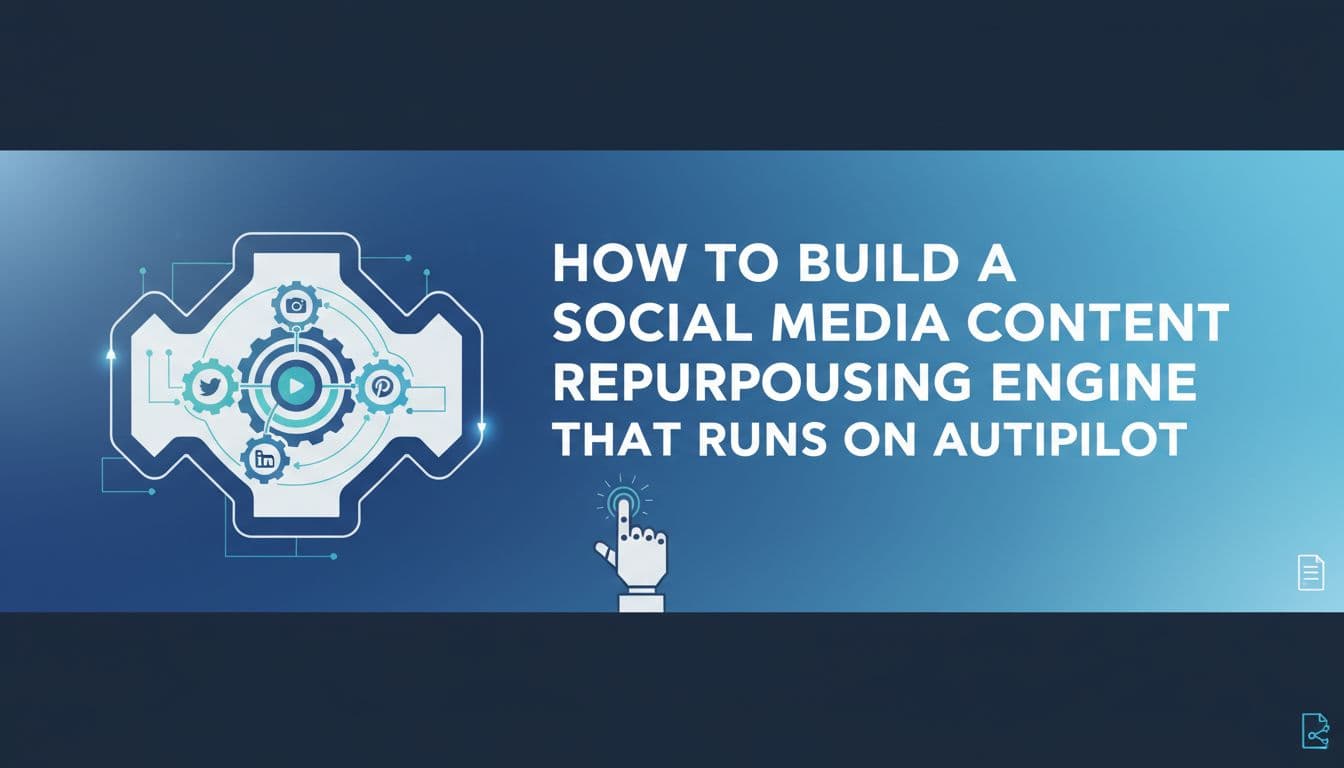
Most content creators are stuck in a loop. You write a blog post, copy a few lines into Instagram, paste a shorter version into LinkedIn, and maybe remember to post something on X before the week ends. That is not a repurposing strategy. That is manual labor dressed up as a workflow. The good news is there is a better way to do this, and it does not require a bigger team or more hours. A real content repurposing engine has four stages: ingest, transform, schedule, and analyze. When those stages run on agentic AI, the whole system works without you touching a keyboard. This article breaks down what that engine looks like, why most repurposing breaks down before it even gets started, and how agentic workflows change what is actually possible for solopreneurs, creators, and marketing teams in 2026.

By Wilzer Jean-Baptiste
Published 12 min read
You spent three hours writing a blog post. You got one LinkedIn share and a few likes. The TikTok version you meant to make never happened. The newsletter excerpt is still in your drafts. Sound familiar?
Most creators and marketers know they should be repurposing content. The problem is that repurposing, the way most people do it, is just more work. Copy this, resize that, rewrite it for LinkedIn, remember to post it on Thursday. It is a second job on top of the first one, and it still does not feel like a system.
What you actually need is an engine. Not a checklist, not a Notion template, not a VA doing copy-paste work. An autonomous, four-stage pipeline that takes what you already create and distributes it across every platform you care about, formatted correctly, timed intelligently, and improving with every cycle. In 2026, that engine runs on agentic AI. And if you are still doing this by hand, you are on hard mode.
Why Your Current Repurposing Process Is Burning You Out
The Copy-Paste Trap
Most content repurposing is still manual. Marketers copy-paste, resize, and rewrite the same post five times by hand. You finish a 1,500-word blog post, and then someone on the team spends another two hours slicing it into a LinkedIn article, a carousel caption, a TikTok script, and three X posts. That is not repurposing. That is just doing the same work twice.
The problem compounds fast. If you are publishing three pieces of long-form content a week, you are looking at six or more hours of derivative work on top of the original creation. Most small teams do not have that margin. So they cut corners. They post the same caption everywhere, skip platforms entirely, or just stop repurposing after a few weeks because it feels like too much.
An autopilot engine replaces that loop with agentic workflows that detect a piece of content, adapt it for each platform's format and audience, and schedule it without anyone touching a keyboard. That shift is not incremental. It changes the economics of content entirely. A solopreneur who was managing two platforms manually can now show up consistently on five without hiring anyone.
Why Manual Repurposing Breaks at Scale
Manual repurposing has a ceiling. You can build a checklist, train a VA, and create a Notion template for every platform. But the moment volume goes up or a team member leaves, the whole system stalls. Agencies feel this most. Managing six client accounts means six content calendars, six sets of platform rules, and six different brand voices to keep straight. Copy-pasting at that scale is not just inefficient. It is a liability.
The deeper issue is that manual repurposing treats every piece of content the same way. You take a blog post and you chop it up. But a good repurposing engine does not just chop. It rewrites, reframes, and re-angles the content for each channel. That requires judgment, and judgment at scale requires AI.
The Hidden Cost of Inconsistency
When repurposing is manual, it is also inconsistent. Some weeks you do it well. Other weeks you forget, or you rush, and you end up posting something that does not match your brand voice or the platform's format. Audiences notice. A LinkedIn post that reads like a TikTok caption gets ignored. A TikTok script that sounds like a press release gets skipped.
Inconsistency erodes trust faster than most creators realize, and it almost always traces back to a broken process, not a lack of talent. The fix is not trying harder. The fix is removing the manual steps that make inconsistency possible in the first place.
The Four-Stage Engine: What Autopilot Actually Looks Like
Stage One: Ingest
The engine starts with ingestion. This is where the system pulls from a source asset. That might be a blog post, a podcast episode, a YouTube video, a webinar recording, or a top-performing post from last quarter. The key is that the system does the pulling. You are not copying a URL into a tool and clicking a button. The workflow triggers automatically, either on a schedule or when a new piece of content is detected in a connected source.
Good ingestion also means the system understands what it is working with. A 45-minute podcast episode needs different handling than a 600-word blog post. An agentic workflow reads the source, identifies the core ideas, and flags the strongest angles before any transformation begins. This is where most manual processes fall short. People skip the analysis step and jump straight to reformatting, which is why repurposed content often feels thin.
Stage Two: Transform
Platform-native formatting is the difference between repurposing that works and repurposing that flops. A LinkedIn post needs a hook and a professional frame. A TikTok needs a script built for spoken delivery. An Instagram carousel needs a visual narrative structure. An X post needs a punchy single idea under 280 characters. These are not just formatting preferences. They are the rules of each platform's culture, and breaking them means your content gets ignored no matter how good the source material is.
An agentic system applies those rules automatically using stored brand voice and platform context, not a generic template. This is a meaningful distinction. A template gives you a structure to fill in. An agentic workflow reads your brand guidelines, understands your tone, knows your audience on each platform, and writes copy that fits all of that at once. The output for LinkedIn sounds like you on LinkedIn. The TikTok script sounds like you on TikTok. Same source, same brand, different voice for each room.
This is where Aidelly's AI-powered content drafting makes a real difference. The system stores your brand voice and applies it across every platform automatically, so you are not rewriting the same post five times to make it sound right.
Stages Three and Four: Schedule and Analyze
Auto-scheduling tied to performance data is what separates a content calendar from a repurposing engine. Posting a repurposed LinkedIn article at 2am because you forgot to set a time is not automation. A real engine reads your historical engagement data, picks the optimal window per platform, and queues the post without a prompt.
Engagement windows vary by platform, by audience, and by content type. Your LinkedIn audience might engage most on Tuesday mornings. Your Instagram Reels might spike on Thursday evenings. A static posting schedule ignores all of that. An agentic scheduling system reads your analytics, identifies the patterns, and makes the timing decision for you.
The fourth stage is what makes the engine get smarter over time. After a post goes live, the system tracks reach, engagement rate, saves, and click-throughs. That data feeds back into the next cycle. If the TikTok version of a blog post outperformed the LinkedIn version by a factor of three, the system notes that and adjusts. Most teams only do stages one and two manually and skip three and four entirely. That is the gap between a content calendar and a repurposing engine.
Why Agentic AI Changes What Is Possible
From Automation to Autonomy
Agentic AI changes the ceiling here. Earlier automation tools could resize an image or post on a schedule. That was useful, but it was still reactive. You had to set up the trigger, define the action, and maintain the rules. The tool did what you told it to do. Nothing more.
Agentic workflows can ideate new angles from a single source asset, write platform-specific copy, apply brand voice, route posts through an approval workflow, publish, and report back on what worked. That is end-to-end content repurposing with no manual steps. The difference between a rule-based automation and an agentic workflow is the difference between a vending machine and a chef. One executes a fixed sequence. The other makes decisions.
For a solopreneur, this means your content engine runs while you are doing client work, sleeping, or building something new. For an agency, it means you can manage twelve client accounts with the same headcount you used for four.

What an Agentic Workflow Actually Does Step by Step
Here is what a real agentic repurposing workflow looks like in practice. A new blog post goes live on your site. The agent detects it, reads the full text, and identifies three strong angles: a data point that would work on LinkedIn, a contrarian take that fits X, and a step-by-step breakdown that could become a TikTok series. It drafts all of those, applies your brand voice to each one, and formats them for their respective platforms.
If you have an approval workflow set up, the drafts go to a reviewer before anything publishes. Once approved, the agent checks your historical engagement data, picks the best time for each platform, and queues everything. After the posts go live, it tracks performance and logs the results. The next time a similar blog post comes in, it uses what it learned. You were not involved in any of that. You wrote the blog post. The engine did the rest.
The MCP Advantage for Technical Teams
For teams that want to go deeper, the Model Context Protocol opens up another layer. Aidelly's MCP Server lets you connect AI assistants like Claude or ChatGPT directly to your social media publishing pipeline. That means you can prompt an AI assistant to pull your top-performing posts from the last 30 days, generate five new repurposed variations, and schedule them across platforms, all from a single conversation. No switching tabs. No manual exports.
This is useful for agencies and marketing teams that already have AI workflows built into their process. Instead of treating social media publishing as a separate step, it becomes part of the same AI-driven workflow. The REST API extends this further, letting developers build custom repurposing pipelines that connect to any content source and push to all platforms programmatically.
Building Your Engine: What to Set Up First
Start With Your Best Source Asset
You do not need to automate everything on day one. Start with your highest-value content source. If you publish a weekly newsletter, that is your engine's fuel. If you record a podcast, start there. Pick the one thing you create consistently that has the most substance, and build the repurposing workflow around it first.
The goal in this stage is to define the transformation rules for each platform you want to reach. What does a LinkedIn post look like when it comes from your newsletter? What does a TikTok script sound like when it comes from your podcast? Write those rules down in plain language. That becomes your brand voice brief, and it is what the AI uses to generate platform-specific content that actually sounds like you.
Connect Your Analytics Before You Scale
Before you turn the volume up, connect your analytics. This is the step most people skip, and it is the reason their repurposing engine never gets smarter. If your scheduling decisions are not tied to real performance data, you are just guessing at timing. And guessing at timing on five platforms is worse than posting manually on two.
Set up cross-platform analytics tracking from the start. Know which content types perform best on each platform, what times your audience is most active, and which source formats translate best. A blog post that becomes a LinkedIn article might outperform a podcast clip on the same platform. That insight is only visible if you are tracking it. Once you have that data flowing, your scheduling decisions go from guesses to evidence-based choices, and the engine starts compounding.
Add Approval Workflows Before You Hand Off Control
If you are building this for a team or for client accounts, add an approval workflow before you let the engine publish autonomously. This is not about distrust. It is about catching edge cases. An AI agent will occasionally miss a cultural reference, get a tone slightly wrong, or draft something that made sense in isolation but does not fit the week's context. A one-person review gate before publishing catches those moments without slowing the whole system down.
Aidelly's approval workflows let you set exactly this up. Drafts route to a reviewer, the reviewer approves or edits, and then the post queues for publishing. The agent handles everything before and after that gate. You stay in control of the output without doing the work of producing it. That balance is what makes autonomous publishing feel safe instead of risky.
A content repurposing engine is not a hack or a shortcut. It is a system that respects your time and your audience. When the four stages work together, you get more reach from every piece of content you create, without adding hours to your week or hiring a bigger team. The gap between where most creators are today and what is possible with agentic workflows is not small. It is the difference between grinding through a content calendar and running a machine that compounds your work while you focus on what only you can do. The right infrastructure makes all four stages possible, from ingestion to analysis, on every platform, at scale. If you are ready to stop doing this by hand, Aidelly is built to be that infrastructure.
You built the engine. Now let it run. Aidelly's agentic workflows handle every stage automatically, from pulling your source content and rewriting it for each platform, to scheduling at the right time and reporting back on what worked. No copy-pasting, no manual queues, no forgetting to post. See how it works at aidelly.ai.
Compare social scheduling tools
Evaluating software for your content workflow? Use our buyer guides and comparisons to compare scheduling, approvals, analytics, and AI workflow fit.