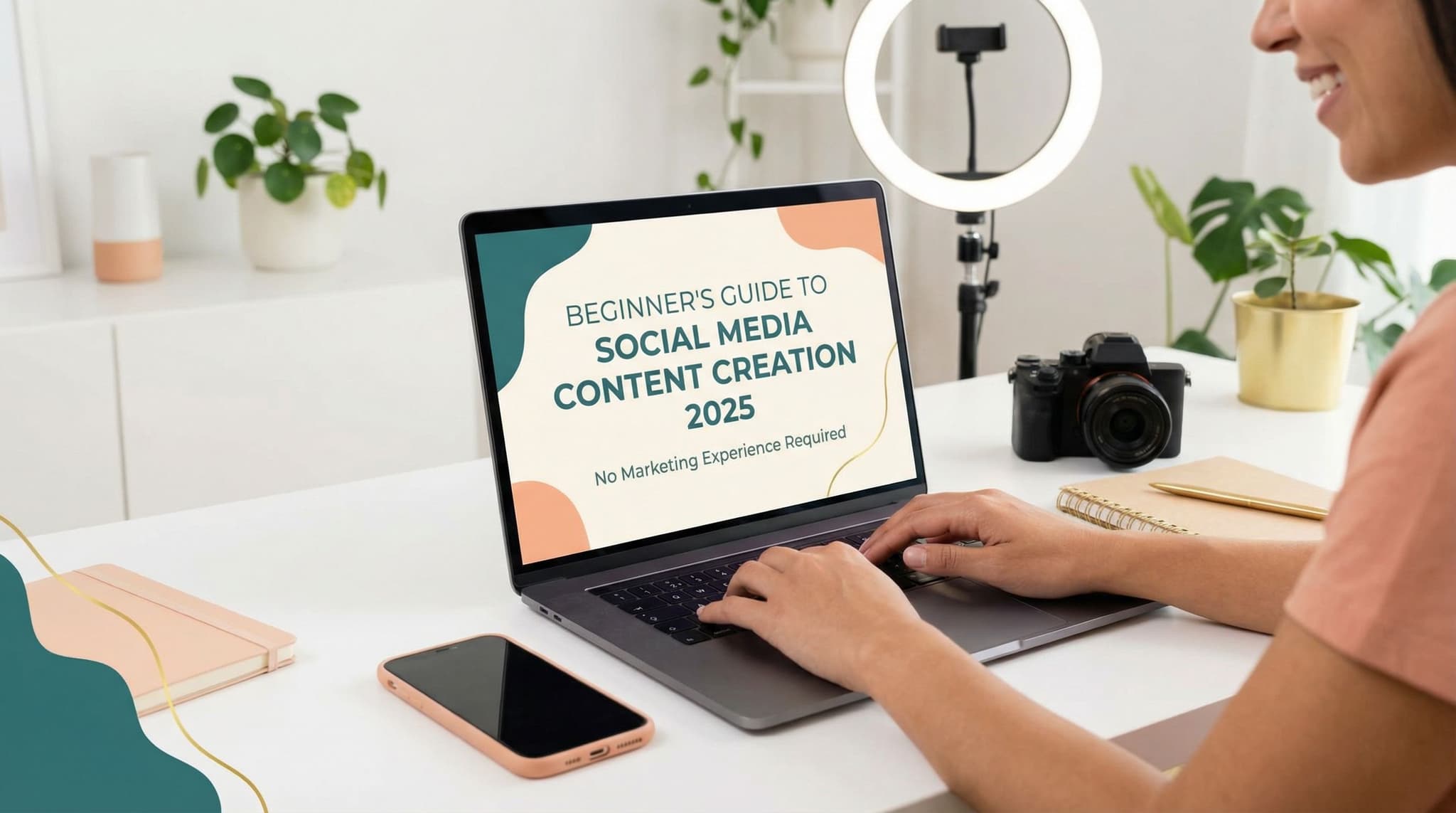
Beginner's Guide to Social Media Content Creation in 2025: No Marketing Experience Required
Feeling overwhelmed by social media? You're not alone. Whether you're a small business owner, freelancer, or aspiring personal brand, creating content without formal marketing training feels intimidating. But here's the truth: you don't need a marketing degree to build an engaged audience. This comprehensive guide strips away the jargon and gives you permission to start exactly where you are. Learn practical frameworks for choosing the right platforms, finding your authentic voice, overcoming perfectionism, and building genuine connections with your audience—all without the corporate fluff.

Wilzer Jean-Baptiste
9 min read
Let's be honest: scrolling through Instagram and seeing those picture-perfect feeds with perfectly curated captions and professional photography can make you feel like social media content creation is something only "real marketers" can do. Maybe you've thought about starting, but then that little voice in your head whispers, "Who am I to share my thoughts? What if nobody cares? What if I mess it up?" Sound familiar?
Here's what I want you to know right from the start: that voice is lying to you. Some of the most successful creators and business owners on social media today started exactly where you are—with zero marketing experience, imposter syndrome in full force, and nothing but a phone and a willingness to try. The difference between those who succeeded and those who didn't wasn't talent or some secret marketing degree. It was consistency, authenticity, and permission to be imperfect.
By 2025, social media isn't optional anymore if you want to grow a business, build a personal brand, or establish yourself as an authority in your field. But the good news? It's also never been more accessible. The platforms are designed for creators like you. The tools are free or affordable. And the audiences are hungry for real, relatable content—not polished corporate messaging.
This guide is your permission slip. We're going to walk through everything you need to know to start creating content that actually resonates, builds genuine connections, and grows your reach. No marketing jargon. No overwhelm. Just practical, human-centered strategies you can implement today.
Section 1: Building Your Foundation—Platforms, Pillars, and Permission to Start
Before you create a single piece of content, you need to understand where you're actually going to show up. This is where most beginners make their first mistake: they try to be everywhere at once. Instagram, TikTok, LinkedIn, Facebook, Pinterest, YouTube—it's exhausting just thinking about it, right? The reality is that spreading yourself too thin across every platform is a recipe for burnout and inconsistency. Instead, you're going to be strategic about choosing one or two platforms where your actual audience hangs out.
Once you've identified your platforms, we'll talk about content pillars—basically the main themes and topics you'll consistently share about. Think of pillars as the backbone of your content strategy. They keep you from wandering off into random territory and help your audience know what to expect from you. The beautiful part? You don't need some complicated marketing framework to figure this out. You just need to understand what you naturally talk about, what value you provide, and what your audience actually wants to learn.
This section is all about removing the decision paralysis and getting you crystal clear on your starting point. Because honestly, choosing your platforms and defining your pillars is where so many people get stuck. They overthink it, they second-guess themselves, and they never actually start. We're going to fix that right now.
1.1: Choose Your Platforms Based on Where Your Audience Actually Spends Time
Here's the thing about platform selection: it's not about which platform is "best" in general. It's about which platform your specific audience uses and where you can show up authentically. A B2B consultant might thrive on LinkedIn while a fitness coach might find their people on Instagram or TikTok. A parenting coach might build their entire business on Facebook groups while an artist finds their community on Instagram. There's no one-size-fits-all answer, which is actually liberating when you think about it.
Start by asking yourself: Where does my ideal customer or audience member spend their time? If you're not sure, that's okay. Think about your friends, your family, your current customers—which apps are they opening first thing in the morning? Where are they scrolling before bed? Are they checking LinkedIn during their work commute or TikTok while cooking dinner?
Here's a quick breakdown of the major platforms in 2025 to help you decide:
- Instagram: Still dominant for visual storytelling, lifestyle brands, e-commerce, coaches, and creators. The algorithm favors Reels (short video), but traditional posts and carousel content still perform well. If you're selling a product or service based on aesthetics or lifestyle, Instagram is worth your attention.
- TikTok: The fastest-growing platform with an algorithm that can take unknown creators viral. Best for entertaining, educational, or trend-based content. If your audience skews younger (Gen Z and younger millennials) or if you're comfortable being less polished and more authentic, TikTok is your playground.
- LinkedIn: The professional network. If you're B2B, if you're a consultant, if you're positioning yourself as a thought leader in your industry, LinkedIn is essential. It's also great for coaches, consultants, and professionals who want to establish authority.
- Facebook: Often overlooked by younger creators, but Facebook Groups are where many communities actually happen. Facebook also has excellent targeting for ads if you eventually want to promote. Good for local businesses, older demographics, and community building.
My recommendation? Pick one platform where you feel most comfortable and where you believe your audience spends time. Master that one for at least 2-3 months before adding a second platform. This prevents overwhelm and allows you to actually build momentum instead of spreading yourself thin trying to manage five different feeds.
If you're genuinely unsure where your audience is, pick the platform that feels most natural to you. The best platform is the one you'll actually show up on consistently. Consistency beats perfection, and consistency beats being on every platform half-heartedly.
1.2: Identify Your Content Pillars Without Needing Formal Marketing Training
Content pillars are basically the main themes or categories you'll talk about on your social media. Think of them as the umbrella topics that everything else falls under. For example, if you're a business coach, your pillars might be: productivity tips, client success stories, and mindset shifts. If you're a nutritionist, your pillars might be: easy recipes, nutrition myths debunked, and meal prep strategies. See how these give you clear direction without being restrictive?
The genius of content pillars is that they prevent you from having an identity crisis on social media. Without them, you might post about your expertise one day, then random life stuff the next, then something completely unrelated the day after. Your audience gets confused about who you are and what you stand for. With pillars, everything you post reinforces your positioning and builds clarity in your audience's mind.
Here's how to identify your pillars without overthinking it:
- What do you naturally talk about? What topics come up in conversations with friends, family, and clients? What do people ask you about? These natural conversation starters are often your best content pillars because they're authentic to who you are.
- What value do you provide? What problems do you solve? What questions do your customers ask repeatedly? Your pillars should directly address these pain points and questions.
- What are you passionate about? You're going to be talking about these pillars constantly, so pick themes that genuinely interest you. If you hate talking about something, it will show in your content.
- What does your audience need to know? Think about the journey your customer or audience member takes. What do they need to understand before they're ready to buy, hire you, or take action?
Most beginners do well with three to five content pillars. This gives you enough variety to keep things interesting without being overwhelming. If you're a life coach, maybe your pillars are: confidence building, relationship advice, and personal growth stories. If you're a freelance designer, maybe your pillars are: design tips, client projects, and industry trends. Keep it simple. You can always refine this as you go, but don't get stuck in analysis paralysis trying to create the "perfect" pillars. They don't have to be perfect—they just have to be real.
1.3: Give Yourself Permission to Start Imperfectly
Before we move on to the actual content creation, we need to address the elephant in the room: imposter syndrome. That voice that tells you that you're not qualified enough, experienced enough, or polished enough to share your knowledge is going to show up. It's going to whisper that you should wait until you're more established, until you've figured everything out, until you're ready. Here's what I want you to know: nobody is ever truly "ready." The people you admire who are killing it on social media? They started messy too. They just started.
One of the biggest barriers to content creation for non-marketers is perfectionism. You think your first post needs to be flawless. Your captions need to be witty. Your photos need to be professionally edited. Your videos need to be high production quality. This is the lie that keeps you from starting, and I'm here to tell you it's absolutely false.
Some of the most engaging content on social media in 2025 is shot on a phone, posted with minimal editing, and contains zero fancy graphics. People are tired of perfection. They're hungry for authenticity. They want to see real humans being real. So here's your permission: your first post can be imperfect. Your caption can be simple. Your photo can be a selfie. Your video can be shaky. What matters is that you show up and you're genuine.
Start where you are. Use what you have. Do what you can. This isn't just a motivational quote—it's the actual strategy that works on social media. Consistency and authenticity beat polish and perfection every single time.
Compare Social Scheduling Tools
Evaluating software for your content workflow? Use our buyer guides and comparisons to compare scheduling, approvals, analytics, and AI workflow fit.
Share this article
Related Articles
Social Media Scheduling for SaaS Companies: How to Automate Demand Gen Without a Full Team
Most SaaS companies are running social media with one or two people who are also doing five other things. The content calendar slips. Posts go out late or not at all. And when something does get published, it's usually a product update that nobody outside the company cares about. There's a better way to run this. Agentic social media tools can turn your existing blog posts, case studies, and product docs into a scheduled demand gen engine that runs without a dedicated content team. This guide walks through exactly how lean SaaS marketing teams can use AI-powered scheduling, smart repurposing, platform-specific timing, approval workflows, and pipeline-focused analytics to build a social presence that actually moves the needle on demo requests and trial starts, not just follower counts.
Oct 6, 2026
Read more
The 10 best social media management tools in 2026
Compare ten social media management tools by agency workflow, approvals, AI drafting, reporting, and client branding—including Aidelly.
Oct 4, 2026
Read more
The 9 best AI tools for social media management in 2026
Compare nine AI social media tools by drafting, design, agent integrations, approvals, and agency workflow—not just caption quality.
Oct 4, 2026
Read moreReady to never miss a post again?
Tell Aidelly what to post. It drafts, schedules, and publishes across 9 platforms while you focus on your business.