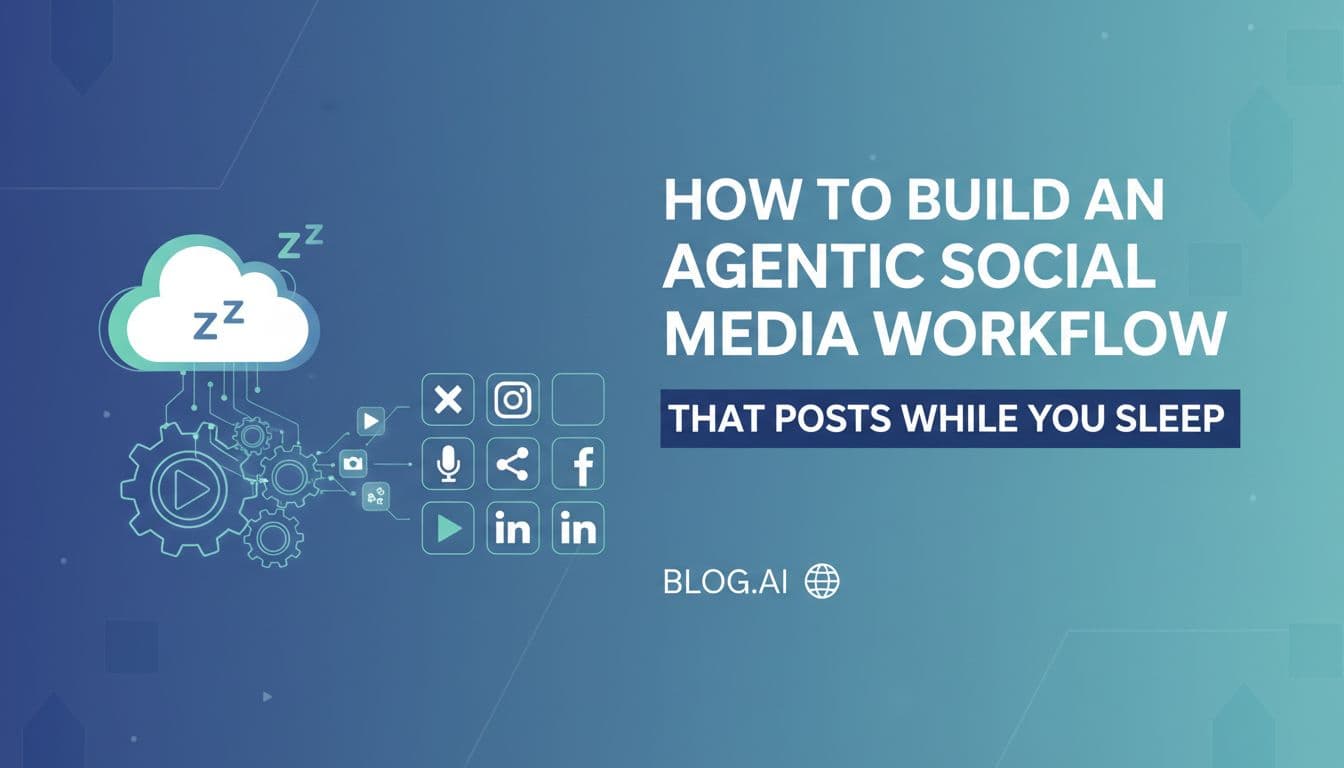
How to Build an Agentic Social Media Workflow That Posts While You Sleep
Most social media tools promise automation but still leave you doing most of the work. You batch-write posts, pick times, upload images, and hit publish — just in a slightly more organized way. That is scheduling, not automation. A true agentic social media workflow is different. AI agents handle content ideation, copywriting, platform optimization, scheduling, and performance analysis without you approving each step. This article breaks down exactly what that looks like in practice: the four layers every agentic workflow needs, why brand voice is the piece most people get wrong, and how smart scheduling is not the same as picking a time slot on a calendar. If you are a solopreneur or running a lean team and social media feels like a part-time job you never signed up for, this is the architecture that changes that.

Wilzer Jean-Baptiste
14 min read
You did not start your business to spend three hours a day writing Instagram captions. But here you are, batching content on Sunday nights, trying to stay consistent across four platforms, and still feeling like you are always behind. The problem is not effort. The problem is that the tools most people use for social media automation are not actually automating much. They are just organizing your manual work into a neater pile.
There is a better way to think about this. Agentic AI does not assist you with social media. It runs social media for you. There is a meaningful difference between those two things, and once you see it, you cannot unsee it. This article breaks down exactly what an agentic social media workflow looks like, the four layers it needs to function, and why the brands that get this right in 2026 will be the ones posting consistently at scale while their competitors are still burning time on content queues.
Scheduling Is Not Automation. Here Is the Difference.
You have probably used a scheduling tool before. Maybe Buffer, Hootsuite, or Later. You write the posts, pick the times, upload the images, and the tool fires them off. It saves you from logging into five apps every morning, but you still did all the creative work. That is a queue manager, not an AI system.
An agentic social media workflow is something different. Instead of you feeding the machine, the machine runs on its own. AI agents pick topics based on your goals, write copy in your brand voice, optimize each post for the platform it is going to, choose the best time to publish based on when your audience is actually active, and then learn from how each post performs. You are not approving every step. The system handles it.
This is not a small difference. It is the difference between having an assistant who needs a brief for every task and one who already knows your business, your audience, and what good looks like. The first one saves you maybe an hour a week. The second one gives you your week back.
What 'Agentic' Actually Means in Practice
The word agentic gets thrown around a lot in 2026, but it has a specific meaning. An AI agent does not just respond to prompts. It takes a goal, breaks it into steps, makes decisions along the way, and completes the task without you holding its hand through each one.
Applied to social media, that means an agentic AI can look at your content goals for the week, decide what topics to cover, write a LinkedIn post and a shorter version for X, pick Tuesday at 9:47 AM because that is when your LinkedIn audience historically engages most, publish it, track how it performs, and use that data to make better decisions next time. You set the goal. The agent handles the execution.
Most tools on the market today are not agentic. They are AI-assisted at best. You still make the key decisions. Agentic workflows flip that. You define the parameters, and the system runs inside them. That shift is what makes the time savings real instead of theoretical.
Why People Stay Stuck on Basic Scheduling Tools
Part of the reason so many people are still using glorified queue managers is that the jump to agentic workflows feels abstract. It is hard to picture what it actually looks like day to day. The other reason is that early AI content tools produced generic, off-brand output that required more editing than writing from scratch. So people gave up and went back to doing it manually.
But the tools have changed. Agentic systems in 2026 can store your brand voice, reference your past content, learn your audience's behavior, and produce posts that sound like you wrote them. The gap between what these systems can do and what most people think they can do is wide. And that gap is where a lot of time and consistency gets lost every single week.
The Four Layers Every Agentic Workflow Needs
Building an agentic social media workflow is not about plugging in one tool and walking away. It has architecture. There are four layers that need to work together, and if any one of them is missing or weak, the whole system breaks down. Here is what each layer does and why it matters.
Layer One: The Content Engine
The content engine is the part of the system that creates posts. Not just any posts. Posts that are on-brand, platform-appropriate, and tied to your actual content goals. This is where most agentic workflows either work or fall apart.
A strong content engine has access to your brand voice guidelines, your tone rules, examples of content you have approved in the past, and a content strategy it can pull from. It does not just generate text. It generates the right text for the right platform. A post going to LinkedIn looks and sounds different from one going to Instagram or TikTok, and the engine knows that. It adjusts length, tone, format, and even the call to action based on where the content is going. When this layer works well, you stop getting posts that feel like they were written by a bot. You start getting posts that sound like you on your best day, published automatically across every channel you care about.
Layer Two: The Scheduling Layer
Once content exists, it needs to go out at the right time. But right time does not mean Tuesday at 10 AM because some blog said so. The scheduling layer in a real agentic workflow analyzes your specific audience's behavior. It looks at when your followers are online, when they have engaged with your content before, and how those patterns shift over time. Then it schedules posts into those windows automatically.
This is not a one-time setup. The system updates its logic as new data comes in. If your Instagram audience starts engaging more on Thursday evenings than Monday mornings, the system notices and adjusts. You do not have to go back in and change anything. The scheduling layer adapts, and that adaptability is what separates smart scheduling from basic auto-scheduling.
Layers Three and Four: The Approval Gate and the Feedback Loop
The approval gate is optional, but important to understand. It is a human review step before content goes live. For solopreneurs who trust their system and want full automation, you can skip it. For agencies managing client accounts or anyone posting about sensitive topics, it is a safety net. The key is that the gate should be lightweight. You are scanning and approving, not rewriting. A well-built agentic system makes this fast because the content is already good.
The feedback loop is what makes the whole system smarter over time. After posts go live, the system tracks performance: reach, engagement, clicks, saves, shares. It uses that data to inform the next round of content. Topics that performed well get revisited. Formats that flopped get dropped. Without this layer, you have automation without learning. With it, the system improves every week. Aidelly's cross-platform analytics feed directly into this loop, pulling performance data from every channel into one place so the system always has fresh signal to work from.
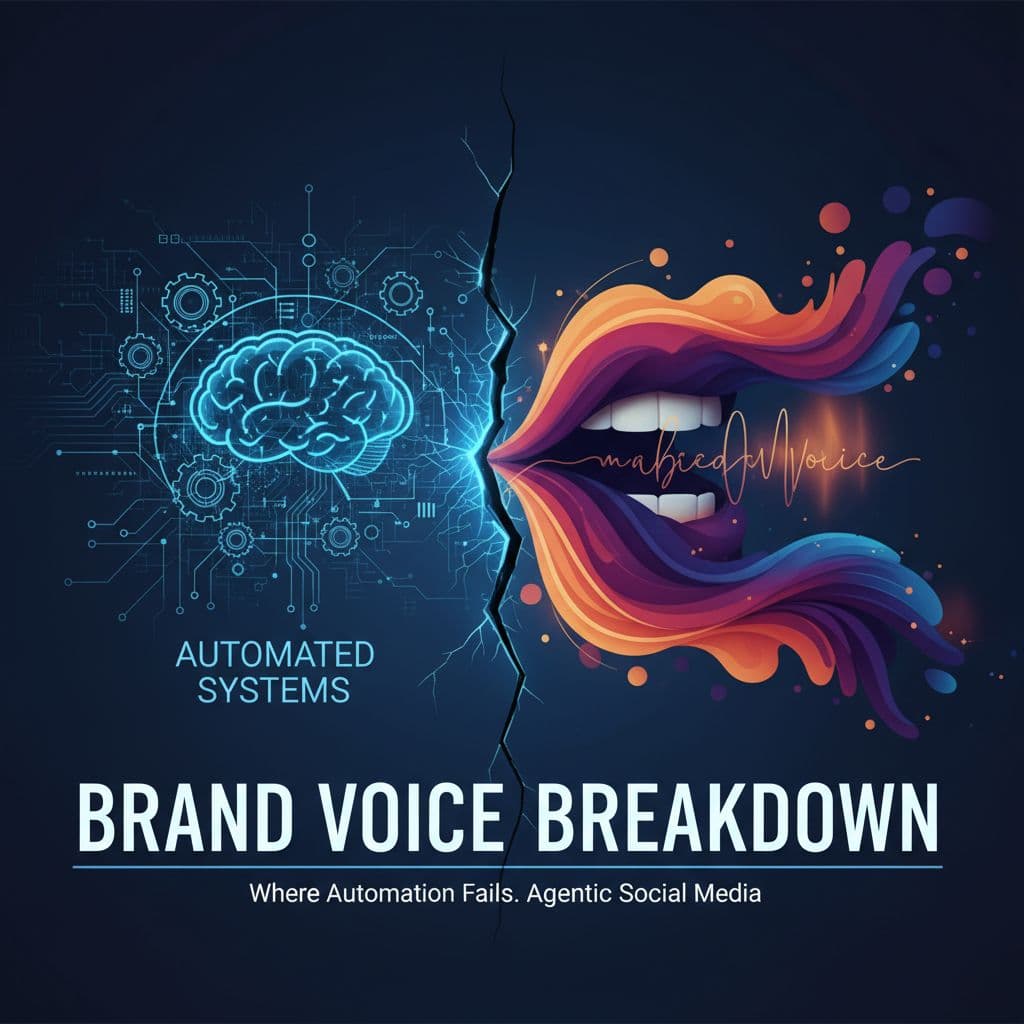
Brand Voice Is Where Most Automated Systems Break
Here is the failure mode nobody talks about enough. You set up an automated content system, it runs for three weeks, and then someone says something feels off. The posts are fine, but they do not sound like you. They are a little too formal, or too casual, or they use phrases you would never use. The content is technically correct but emotionally wrong.
This happens when the AI does not have enough to work from. A one-time prompt that says 'write in a friendly, professional tone' is not brand voice. It is a direction. Brand voice is the specific words you use, the ones you avoid, the way you open a post, how you handle humor, what you never say. It takes examples, guidelines, and ongoing reference material to get right. And getting it right is not optional if you want the workflow to hold up long-term.
Why a One-Time Prompt Is Not Enough
When you give an AI a prompt and ask it to write in your voice, it does a reasonable job for that one post. But without stored guidelines it can reference every time, the output drifts. Post ten sounds like you. Post forty sounds like a generic brand account. The further you get from the original prompt, the more the voice degrades.
Long-term agentic workflows need stored brand voice. That means documented tone rules, a list of words and phrases you use and avoid, examples of your best-performing posts, and a set of content pillars the system can pull from. When all of that is baked into the system, every post it generates has something real to reference. The voice stays consistent whether the system is writing post five or post five hundred. Aidelly's Brand Voice and Asset Management feature is built for exactly this. You store your guidelines and example content once, and every post the AI generates pulls from that library automatically.
The Consistency Problem at Scale
Brand voice is not just a quality issue. It is a trust issue. When your audience sees your content, they should recognize it as yours before they even see your name. That recognition builds over time through consistency. If your tone shifts every few weeks because the AI ran out of reference material, that recognition never builds. Your content becomes forgettable, even if individual posts are good.
The brands that win on social media in 2026 are not the ones posting the most. They are the ones posting consistently with a voice people recognize. Agentic workflows make that possible at a scale one person could never maintain manually. But only if the brand voice layer is built correctly from the start. Skipping this step is the most common reason automated social media systems fail within the first two months.
What Good Brand Voice Setup Looks Like
Before you turn on any agentic system, spend time on this. Write down ten phrases that sound like your brand and ten that do not. Pull five of your best-performing posts and note what made them work. Define your content pillars, the three or four topics you always come back to. Document your tone in plain language: are you direct or warm, playful or serious, expert or peer?
The more specific you are, the better the system performs. Vague instructions produce vague output. If you tell the AI you have a 'casual but professional' tone, it will guess what that means. If you tell it you always open posts with a question, never use corporate jargon, and end with a practical takeaway rather than a call to action, it has something real to work from. That specificity is what keeps the voice consistent at scale.
What You Actually Get When the Workflow Runs
It is worth being concrete about the payoff here, because the benefits of an agentic social media workflow are bigger than most people expect and different from what they assume. Most people think the win is time saved. That is part of it. But the bigger win is something most small teams have never been able to achieve: content consistency at scale, across multiple platforms, without a full-time person dedicated to it.
Smart Scheduling vs. Auto-Scheduling
A lot of tools advertise auto-scheduling. You turn it on, and the tool picks a time. But most of these tools pull from generic data: studies that say LinkedIn engagement peaks on Wednesday mornings or Instagram performs best on weekdays. That data is averaged across millions of accounts. It has almost nothing to do with your specific audience.
Smart scheduling is different. It looks at your audience's actual behavior. When do your followers open the app? When have they engaged with your posts before? What days and times produce the most reach for your account specifically? And then it updates that logic as patterns change. If your audience shifts because you ran a campaign that brought in a new segment of followers, the scheduling layer adjusts automatically. Posting at the right time for your audience versus the right time for the average account can be the difference between a post reaching 400 people and reaching 4,000. The content does not change. The timing does. And in an agentic workflow, the system handles that optimization every single time without you touching it.
Content Consistency at Scale
Here is the number most solopreneurs and small teams do not sit with long enough. If you want to post consistently across three or more platforms, with platform-appropriate content, at optimal times, with a consistent brand voice, and with performance tracking informing each new round of content, that is a full-time job. A real one. Not a side task you fit in between client calls.
Without an agentic system, you either hire someone, pay an agency, or do it yourself and burn out within six weeks. Most people cycle through all three options and end up back at square one. With an agentic workflow, one solopreneur or a two-person team can match the output of a full content department. Not because the AI is magic, but because it handles the repetitive, time-consuming parts of the process automatically. You focus on strategy and direction. The system handles execution. That is the real payoff: content consistency at a scale that was not possible for small teams before agentic AI existed.
What You Still Need to Do
An agentic workflow does not mean you disappear entirely. You still set the strategy. You still define your goals, your content pillars, and your brand voice. You review performance data and decide when to change direction. You make calls about campaigns, launches, and anything time-sensitive that the system would not know about on its own.
Think of it this way. The system is a skilled operator who knows your brand and your audience. You are the creative director who sets the vision. You do not write every post. But you do decide what the brand stands for and where it is going. That division of labor is what makes the whole thing work. And it is a much better use of your time than writing Instagram captions at 11 PM on a Sunday when you should be resting before the week ahead.
An agentic social media workflow is not a shortcut. It is a system. It requires you to do the upfront work of defining your brand voice, your content pillars, and your goals. But once those pieces are in place, the system runs. It creates content, schedules it at the right times for your specific audience, learns from performance data, and keeps your brand showing up consistently across every platform without you managing each step.
The gap between brands that post consistently and brands that post sporadically is almost never about effort or creativity. It is about infrastructure. The right system handles the execution so you can focus on the parts of your business that actually need you.
If you are ready to stop batching posts on Sunday nights and start running a workflow that works while you sleep, the architecture is here. The only question is whether your current tools are built to run it.
If you want a low-lift way to apply these ideas, Aidelly helps you keep your social content consistent without extra busywork.If you want your social media to run while you sleep, you need more than a scheduler. You need a system that knows your brand, reads your audience, and keeps posting without waiting on you. Aidelly is built around agentic workflows that handle content creation, scheduling, and performance analysis end-to-end, so you stop being the bottleneck. See how it works at aidelly.ai.
Compare Social Scheduling Tools
Evaluating software for your content workflow? Use our buyer guides and comparisons to compare scheduling, approvals, analytics, and AI workflow fit.
Share this article
Related Articles
Social Media Analytics for Coaches: Which Numbers Actually Tell You If It's Working
Most coaches post consistently, watch the likes roll in, and still wonder why their discovery calls aren't filling up. The problem isn't the content. It's the metrics they're watching. Follower count and likes feel good, but they don't pay the bills. The numbers that actually connect to client bookings are hiding in plain sight: profile visits, link clicks, DMs triggered by a specific post, and how many of those conversations turn into calls. This article breaks down exactly which metrics matter for coaches, how different platforms serve different stages of your client journey, and how to stop guessing about what's working. If you're posting three to seven times a week and still unsure whether social media is building your business, this is the clarity you've been looking for.
May 19, 2026
Read more
How Restaurants Can Schedule a Month of Social Content in Under Two Hours
Most restaurant owners spend 5 to 10 hours a month on social media and still post inconsistently. The problem is not effort. It is the lack of a repeatable system. This guide gives you a real, three-phase framework that takes under two hours once a month and keeps your restaurant visible all 30 days. You will learn how to batch your content, use agentic AI to handle the heavy lifting, and schedule everything across Instagram, Facebook, TikTok, and more without touching it again until next month. Whether you are running a busy dinner service solo or managing social for a handful of restaurant clients, this system works because it is built around how restaurants actually operate, not how marketing textbooks say they should.
May 21, 2026
Read more
TikTok Scheduling for Small Businesses: How to Stay Consistent Without Being Glued to Your Phone
Most small business owners know they should post on TikTok more often. The problem is not motivation. It is that posting consistently while running a real business feels impossible when TikTok seems to demand you show up every single day, in real time, on demand. This article makes the case that consistency is not a willpower problem. It is an infrastructure problem. When you treat TikTok like a daily task you have to remember, you will always lose to the hundred other things competing for your attention. But when you build a system that handles creation, timing, and scheduling without you touching your phone every day, consistency becomes the default. Here is how small business owners in 2026 are using batch content creation, smart scheduling, and agentic AI workflows to stay active on TikTok without it eating their week.
May 20, 2026
Read moreReady to never miss a post again?
Tell Aidelly what to post. It drafts, schedules, and publishes across 9 platforms while you focus on your business.