10 Questions Solopreneurs Have About Social Media in 2026, Answered
 By Wilzer Jean-Baptiste20 min read
Let's be honest: social media can feel like a black hole for solopreneurs. You've heard that you need to be active, but nobody seems to agree on which platforms matter, how much time you should actually spend, or whether any of it will actually make you money. Meanwhile, you're juggling client work, operations, and about seventeen other responsibilities that demand your attention right now.
The truth is, social media for solo business owners doesn't have to be complicated or all-consuming. It just needs to be strategic and sustainable. In this guide, we're answering the 10 questions that keep solopreneurs up at night—the real, practical concerns that affect your bottom line and your wellbeing. Whether you're a freelance designer, consultant, coach, or any other independent professional, you'll find actionable answers that don't require a marketing degree or a massive budget.
Finding Your Rhythm: Time, Platforms, and Planning
One of the biggest mistakes solopreneurs make is trying to maintain the same social media presence as a company with a dedicated marketing team. That's not just unrealistic—it's a fast track to burnout. The key is understanding how to work smarter, not harder, by being intentional about where you spend your limited hours and how you structure your content workflow.
This section covers the foundational elements of a sustainable social media strategy: how much time you actually need to invest, which platforms deserve your attention based on your specific business, and how to create systems that keep you consistent without consuming your entire life. These aren't theoretical concepts—they're battle-tested approaches that successful solopreneurs use every single day.
1. How Much Time Should I Actually Spend on Social Media Daily or Weekly?
Here's the answer nobody wants to hear but everybody needs: it depends. But let me give you the practical framework that actually works.
For most solopreneurs, 3-5 hours per week is the sweet spot for building genuine engagement and growing your audience without sacrificing your actual business. That breaks down to roughly 30-45 minutes per day if you're working seven days a week, or about an hour per day if you're focusing on five business days. Some weeks you might do more; other weeks you'll do less. That's okay.
The ROI calculation changes based on your business model. If you're a B2B consultant where social media is primarily a credibility tool and lead generator, you might invest 4-6 hours weekly. If you're a personal brand like a coach or creator where your social presence directly impacts your revenue, you might go to 8-10 hours. But here's the critical distinction: not all social media hours are created equal. Mindlessly scrolling and responding to comments all day is different from strategic content creation and intentional engagement.
The most effective approach breaks your time into batches: dedicate 2-3 hours once or twice per week to creating and scheduling content, then spend 15-20 minutes daily engaging with your community. This rhythm feels sustainable because you're not constantly switching between creation and consumption mode. Your brain actually works better this way, and your audience notices the difference in quality.
2. Which Platforms Should I Focus On for My Specific Business?
The biggest waste of solopreneur time? Trying to maintain an active presence everywhere. You don't need to be on TikTok, Instagram, LinkedIn, Twitter, YouTube, Pinterest, and Facebook simultaneously. What you need is a laser-focused presence on the 1-3 platforms where your actual audience hangs out.
LinkedIn dominates for B2B professionals: consultants, coaches, agency owners, and anyone selling services to other businesses. If your clients are corporate decision-makers or other business owners, LinkedIn should be your primary focus. The engagement quality is exceptional here because people are in a professional mindset.
Instagram works best for visual businesses: designers, photographers, fitness coaches, beauty professionals, and anyone whose work is inherently visual. It's also strong for lifestyle coaches and personal brands. The algorithm favors consistent posting and genuine engagement, making it perfect for solopreneurs willing to show personality.
YouTube is becoming increasingly important for coaches, educators, and anyone with expertise to share. The barrier to entry feels high, but a simple setup with good audio and decent lighting is sufficient. YouTube's algorithm is forgiving to smaller channels if your content is genuinely helpful.
TikTok and Threads can work for certain niches—particularly if you're targeting younger audiences or want to position yourself as a trend-aware expert. But they're not mandatory for most solopreneurs.
Pick one or two platforms maximum. Build real presence there before considering expansion. This focused approach generates better ROI than spreading yourself thin across five platforms with mediocre content on each.
3. How Do I Create a Content Calendar and Batching Strategy That Actually Saves Time?
Content batching is the single most time-saving technique for solopreneurs. Instead of creating content on-the-fly whenever you remember, you dedicate a specific block of time—usually 2-3 hours once or twice monthly—to creating all your content for the next 4-8 weeks.
Here's a practical monthly batching workflow: Start by identifying 4-8 core themes or topics relevant to your business. If you're a business coach, these might be topics like productivity, team dynamics, financial management, and work-life balance. Spend your batching session creating 20-30 pieces of content around these themes—a mix of tips, stories, questions, and insights. You can write these in Google Docs, record quick voice memos to transcribe later, or use templates that speed up the process.
Your content calendar doesn't need to be fancy. A simple Google Sheet or Trello board works perfectly. Include: the content piece, which platform it's going on, the posting date, and any hashtags or captions. The key is having it planned before you sit down to create. This removes decision fatigue and keeps you in creation mode rather than constantly deciding what to post.
When batching, separate your content by format. Dedicate 45 minutes to writing carousel posts, 45 minutes to writing captions, 30 minutes to creating graphics or finding images, and 30 minutes to recording any video content. This context-switching approach is way more efficient than jumping between formats constantly. You'll also notice patterns in what works, making it easier to improve your content over time.
Pro tip: batch your engagement too. Instead of responding to comments throughout the day, set aside 10-15 minutes in the morning and evening to respond to messages and comments. Your audience appreciates consistency, and you'll maintain better boundaries between work and personal time.
Growth and Engagement: Building Your Audience Without Paid Ads
The question every solopreneur asks: How do I grow without spending money on ads? The answer is actually more encouraging than you'd think. Organic growth is slower, sure, but it builds a genuinely engaged audience that converts better and sticks around longer than people who clicked on an ad because of a flashy offer.
Building an authentic following comes down to three core elements: being genuinely helpful, showing up consistently, and engaging authentically with others in your space. It sounds simple because it is. The challenge isn't understanding the concept—it's executing it week after week when you're also running your actual business.
This section focuses on practical tactics that have proven effective for solopreneurs across industries. These aren't hacks or shortcuts; they're sustainable practices that compound over time and actually feel good because you're building real relationships rather than chasing vanity metrics.
4. How Can I Grow My Followers and Engagement Without Paid Advertising?
Organic growth requires a shift in mindset. You're not trying to interrupt people's feeds with promotional content; you're trying to become a valuable part of their feed—someone they actually want to hear from.
Provide genuine value first. Share insights, tips, and knowledge that your audience can use immediately. If you're a copywriter, share actual copywriting principles. If you're a therapist, share real therapeutic concepts. If you're a designer, share actual design thinking. This positions you as someone worth following because people get value just from seeing your posts, regardless of whether they ever buy from you.
Engage authentically with others. Spend 10-15 minutes daily engaging with content from people in your space and your target audience. Leave thoughtful comments—not generic emojis or "Great post!" but actual insights or questions that show you read and thought about their content. This does two things: it builds genuine relationships, and it gets your name in front of their followers. When people see you consistently showing up in the comments of accounts they follow, they become curious about you.
Go live occasionally. Live content gets preferential treatment from algorithms across most platforms. You don't need production value; just you, your phone, and something valuable to share. A 15-minute live Q&A session or a quick walkthrough of your process can generate more engagement than five perfectly polished posts. People connect with realness.
Create shareable content. Identify the topics your audience most engages with and lean into those. If your audience shares your posts, they introduce you to their followers. This is how organic growth accelerates. Pay attention to what gets shared, bookmarked, or saved—these are signals that your content resonates.
Build micro-relationships. Identify 10-15 other solopreneurs or accounts in your space who are at a similar level. Follow their content, engage regularly, and occasionally reach out for a genuine conversation. Some of these might become collaborators, referral partners, or friends. These relationships often lead to organic growth through mutual promotion and genuine support.
5. How Do I Measure Social Media Success With Metrics That Actually Matter?
The problem with vanity metrics is that they feel good but don't tell you whether social media is actually working for your business. Ten thousand followers who never buy anything is less valuable than one thousand followers who convert at a high rate.
Identify your primary goal first. Is social media primarily for brand awareness, lead generation, community building, or direct sales? Your metrics should align with this goal. A coach building authority might prioritize website clicks and email list growth. A freelancer might focus on inquiry messages. An e-commerce solopreneur might track click-through rates and conversion rates.
Track these core metrics:
- Engagement rate (not total engagement): Divide total engagements by total followers and multiply by 100. A 2-3% engagement rate is solid for most solopreneurs. This tells you whether your audience actually cares about your content.
- Traffic to your website or landing pages: Use UTM parameters to track which social platforms send the most valuable traffic. This reveals which platforms deserve your time.
- Conversion metrics: Track how many followers actually become email subscribers, customers, or clients. This is the metric that matters most for revenue.
- Message inquiries: If people are DMing you with questions or interest, that's a positive signal even if other metrics seem low.
- Content performance trends: Which types of content get the most engagement? What topics resonate? This informs your future strategy.
Set a simple tracking system. A Google Sheet with monthly metrics is sufficient. Track 3-5 key metrics, not twenty. Review monthly, not daily. The goal is spotting trends over 8-12 weeks, not obsessing over daily fluctuations.
Remember: follower count is the least important metric. A solopreneur with 2,000 highly engaged followers who trust their expertise and buy their products is in a better position than someone with 20,000 disengaged followers.
6. How Can I Automate Social Media Tasks While Staying Authentic?
Automation gets a bad reputation because people use it wrong. Automation isn't about posting generic content and disappearing. It's about batching repetitive tasks so you have more mental energy for genuine connection.
What to automate: Scheduling posts (the actual posting, not the creation), sending welcome messages to new followers, scheduling daily reminders to engage, and recurring calendar invites for your batching sessions. These are mechanical tasks that don't require creativity or human touch.
What not to automate: Responses to comments, direct messages, and real-time engagement. People can tell when you're using auto-responses, and it kills the genuine connection you've built. Your authentic engagement is what makes followers feel valued.
Automation tools that work: Buffer and Later are excellent for scheduling posts across multiple platforms. They're affordable ($5-15/month) and simple enough that you don't need technical skills. Hootsuite is more powerful if you manage multiple accounts, but it's overkill for most solopreneurs. For email automation, Mailchimp or ConvertKit integrate with social platforms and help nurture followers who become subscribers.
The sweet spot: schedule your content batches 1-2 weeks in advance, but stay active in real-time engagement daily. This creates the perception of a constantly present, engaged account while protecting your actual time. Your followers don't know if you posted at 9 AM or scheduled it at 9 PM—they just know you're consistently showing up and responding to them.
Monetization, Reputation, and Sustainability: Building a Business That Lasts
Here's where social media becomes actually valuable: when it directly impacts your revenue. For solopreneurs, social media's true ROI comes from converting your audience into paying customers, managing your reputation so you attract the right people, and maintaining the whole thing without losing your mind.
This final section tackles the practical business side of social media—the part that matters most to your bottom line and your sanity. We'll cover how to turn followers into customers, how to handle the inevitable negativity that comes with visibility, and how to protect your mental health while building something sustainable.
These aren't nice-to-have skills; they're essential for turning social media from a time-consuming obligation into an actual business asset.
7. How Do I Handle Negative Comments and Manage My Online Reputation?
Visibility brings negativity. It's not personal; it's just the nature of having a voice online. The key is developing a system for handling criticism that protects your reputation and your peace of mind.
Distinguish between constructive criticism and trolling. Constructive criticism comes from someone genuinely trying to help or engage. Trolling is someone trying to provoke or upset you. Your response should differ dramatically.
For constructive criticism: Thank them publicly. Engage thoughtfully. Show that you're open to feedback and willing to evolve. This actually builds credibility because people see you're confident enough to hear different perspectives. Example: "Great point—I hadn't considered that angle. Let me think about this more." You don't have to agree with everything, but you can acknowledge the perspective.
For trolling or abusive comments: Delete them. Seriously. You own your space. You don't owe anyone a platform for harassment or abuse. A simple rule: if a comment is disrespectful, off-topic, or abusive, it goes. You can explain in a reply ("We keep this community respectful") or just silently delete it. Either way, don't engage with the negativity.
Develop a response template for common criticism. If you get similar negative comments repeatedly, write a thoughtful response you can adapt and use. This prevents you from getting emotional or defensive in the moment. You're prepared with a measured, professional response.
Set a policy for yourself: Don't respond to negative comments when you're emotional. Wait at least an hour. Read it again. Then decide if a response is necessary. Most negative comments don't deserve engagement. Your silence is often the most powerful response.
Monitor your reputation proactively. Set a Google alert for your name and business. Occasionally search your business name on social platforms. This helps you catch issues early and respond before they escalate. For solopreneurs, your reputation is your business—protecting it matters.
Build a community of supporters. When you have a genuine community that values you, the occasional negative comment doesn't hurt. People defend you, contextualize criticism, and remind you of your value. This is why authentic engagement and building real relationships is so important.
8. How Do I Convert My Social Media Followers Into Paying Customers?
This is the question that separates solopreneurs who make money from social media versus those who just waste time on it. The conversion happens through a clear value ladder and consistent nurturing, not hard selling.
Build a value ladder: Start by giving away genuine value for free on social media. This establishes trust and positions you as an expert. Next, offer a free or low-cost entry point (lead magnet, free consultation, free mini-course). Then, move people to your paid offerings. Don't skip the free value stage—it's where trust is built.
Create a clear path to your offering. Your social media should have a link to your website, email signup, booking page, or online store depending on your business model. Don't make people hunt. If you're a service provider, link to your booking calendar. If you're a coach, link to your email signup. If you're a creator, link to your membership or paid course. Make the next step obvious.
Tell conversion stories. Don't just say "My coaching works." Tell the story of a specific client who was struggling with X, what they learned from working with you, and the result they achieved. Stories convert because people see themselves in them. Share 1-2 conversion stories per month across your platforms.
Use a simple CTA strategy: End your social content with a clear call-to-action. Not every post needs a hard sell, but regularly direct people to the next step. "DM me if you're interested in learning more," "Link in bio to book a free call," "Comment below if you struggle with this too." These CTAs move interested people from passive followers to active leads.
Create exclusive offers for your social audience. Give your followers a special discount code or exclusive offer that shows them they're valued and incentivizes action. A simple "Social followers get 20% off" or "Mention you found me on Instagram for a free consultation" works well.
Nurture through email. Your social media's job is getting people's attention; email's job is building the relationship and facilitating the sale. Build an email list from your social platforms, then nurture those subscribers with valuable content and occasional offers. This is where most conversions actually happen.
Track your conversion rate. If 1,000 people see your post and 10 click through to your website, that's a 1% click-through rate. If 100 people sign up for your email list, that's a 10% conversion rate from clickers. If 5 become paying customers, that's a 5% conversion rate from email subscribers. Understanding these numbers helps you optimize your funnel.
9. What Tools and Software Should I Use to Manage Multiple Platforms Efficiently?
The right tools can cut your social media time in half. The wrong tools will waste your time and drain your budget. Here's what actually works for solopreneurs without breaking the bank.
Content scheduling: Buffer ($5-15/month) is perfect for solopreneurs. It's intuitive, affordable, and integrates with all major platforms. Later ($15/month) is great if you primarily use Instagram and want visual planning. Hootsuite ($49+/month) is more powerful but unnecessary for most solo businesses.
Content creation: Canva ($13/month pro or free version) is essential for creating graphics without design skills. Descript ($12/month) handles video and podcast editing surprisingly well. CapCut (free) is excellent for short-form video if you're on TikTok or Instagram Reels.
Analytics and insights: Most platforms offer built-in analytics (Instagram Insights, LinkedIn Analytics). For a unified view, Sprout Social or Hootsuite work, but they're expensive. Honestly, checking each platform's native analytics monthly is sufficient for most solopreneurs.
Email integration: ConvertKit ($25/month) or Mailchimp (free tier available) connect your social followers to your email list. This is crucial because email is where conversions happen.
CRM and messaging: HubSpot (free CRM tier) helps you track conversations and leads across platforms. If you get significant DM inquiries, this prevents you from losing leads.
The budget-friendly starter stack: Canva ($13) + Buffer ($5) + Mailchimp (free) + your platform's native analytics = $18/month. This covers all bases for a solopreneur just starting. As you grow, add tools selectively based on actual needs, not FOMO.
Pro tip on tools: Don't add a tool unless it saves you more time than it takes to learn and maintain. A tool that saves you 3 hours per month is worth $20/month. A tool that saves you 15 minutes is not. Be ruthless about tool selection.
10. How Do I Maintain Work-Life Balance and Avoid Social Media Burnout?
This is the most important question because without balance, none of the other strategies matter. Burnout kills solopreneurs faster than anything else, and social media is a particularly sneaky burnout culprit because it's always on, always demanding, always showing you what you're missing.
Set firm boundaries. Decide your social media hours and stick to them. If you're batching content on Tuesdays and Thursdays, great—but don't check your notifications on Sunday. If you're doing daily 15-minute engagement sessions, set a timer and stop when it goes off. Your followers don't need you 24/7.
Turn off notifications. Seriously. Disable push notifications from all social platforms. Check them intentionally during your scheduled times, not reactively throughout the day. This single change reduces anxiety and reclaims mental space.
Create a separate work phone or user profile. If possible, use a different device or user profile for social media work versus personal use. This creates psychological separation that helps you actually disconnect. If that's not possible, at least log out of work accounts on your personal phone.
Batch your consumption, not just creation. Don't scroll social media for "research" or "inspiration." If you want to research your industry, do it intentionally for 20 minutes, not mindlessly for two hours. Scrolling feels productive but drains mental energy.
Remember: you're building a business, not chasing trends. Every new platform, trend, or feature doesn't require your attention. If TikTok doesn't align with your audience or energy, skip it. If Threads isn't working for your business, don't force it. You're not behind; you're focused.
Celebrate small wins. Solopreneurs are notoriously hard on themselves. Celebrate when someone comments thoughtfully, when you hit a new follower milestone, when you convert a customer from social. These wins matter and deserve recognition.
Consider a social media day off. Pick one day per week where you don't create, post, or engage. Just business as usual. This prevents the creeping feeling that social media is your entire life. It also makes you more creative and energized when you return to it.
Evaluate quarterly. Every three months, ask yourself: Is social media working for my business? Do I feel good about my strategy? Is the time investment worth the results? If the answer is no, change something. You're allowed to pivot, simplify, or even take a break from certain platforms. Your business should serve your life, not the other way around.
Building a sustainable social media presence as a solopreneur isn't about doing everything perfectly or spending every waking hour online. It's about being strategic with your limited time, focusing on the platforms and practices that actually move your business forward, and protecting your mental health in the process. The 10 questions we've covered—from time allocation and platform selection to conversion strategies and burnout prevention—form the foundation of a social media approach that actually works for independent business owners.
The key insight running through all of this is that efficiency matters more than perfection. When you batch your content, automate the mechanical tasks, and engage authentically with your community, you create a system that feels sustainable instead of exhausting. Your followers notice the difference between someone who's present and intentional versus someone who's scattered and burned out. By implementing these strategies—especially focusing on your core platforms, creating a batching workflow, and maintaining clear boundaries—you'll find that social media stops being a drain on your time and becomes a genuine asset to your business.
The tools and systems you choose to manage this strategy will ultimately determine whether these practices stick or fade away. The right combination of scheduling tools, content creation resources, and analytics platforms can save you hours each month while maintaining the authenticity that makes social media actually work. Start simple, measure what matters, and scale only what's working. Your future self—and your business—will thank you for the sustainable approach.
Managing social media as a solopreneur doesn't have to mean sacrificing your sanity or your schedule—it's all about working smarter, not harder, and that's where having the right support makes all the difference. Aidelly helps you create and schedule engaging content effortlessly while maintaining a consistent brand voice across all your platforms, so you can focus on what you do best: running your business and building genuine connections with your audience. If you're ready to take the guesswork out of your social media strategy and reclaim some of your time, get started at aidelly.ai.Compare Social Scheduling Tools
Evaluating software for your content workflow? Use our buyer guides and comparisons to compare scheduling, approvals, analytics, and AI workflow fit.
Share this article
Related Articles
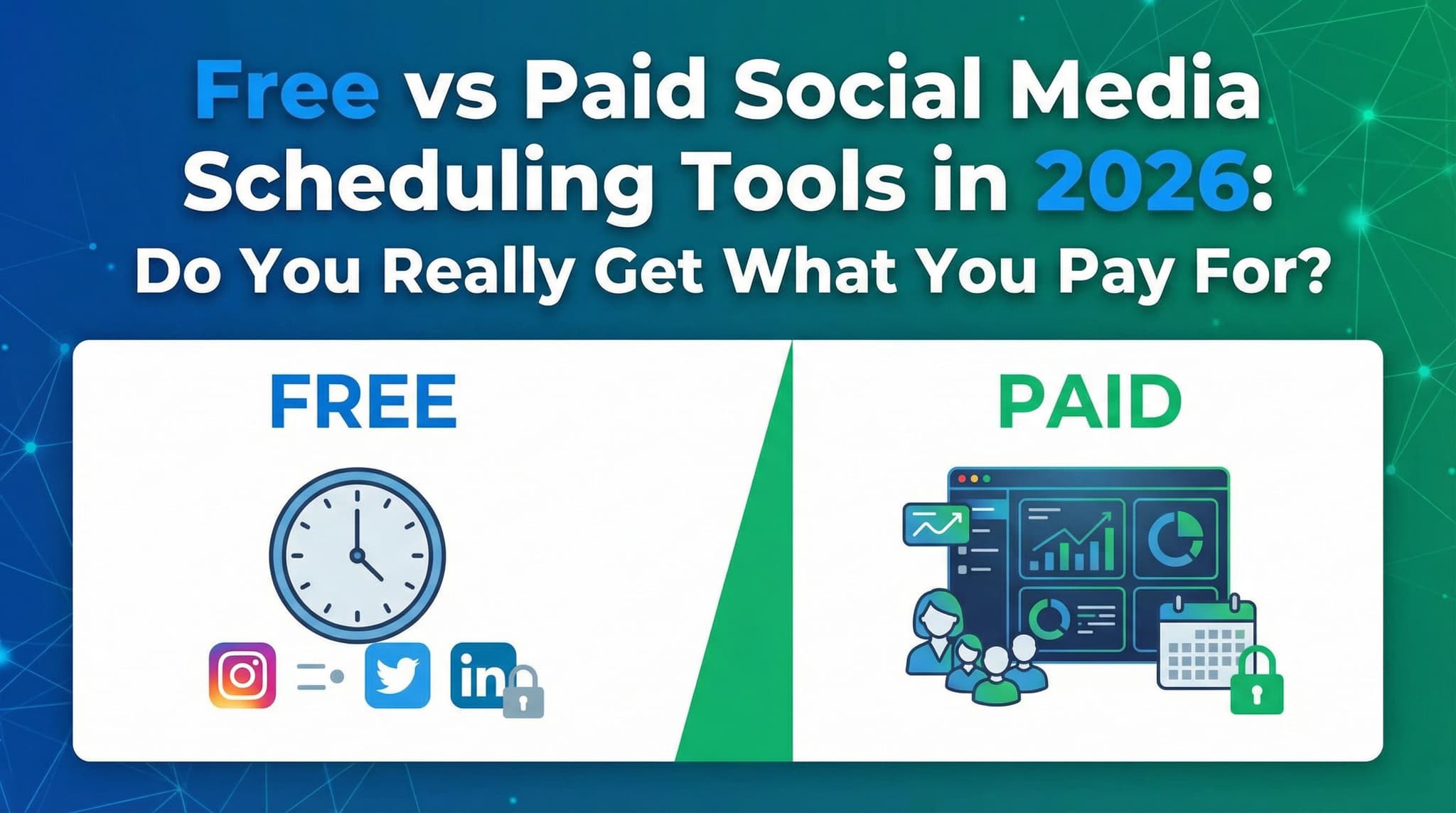
Free vs Paid Social Media Scheduling Tools in 2026: Do You Really Get What You Pay For?
The social media scheduling tool landscape in 2026 is more crowded than ever. But here's the real question: do you actually need to pay for premium software, or can free tools handle your content strategy? We break down the true cost-benefit analysis of free versus paid solutions, revealing when budget-friendly options genuinely suffice and when paid tools deliver measurable ROI that justifies the investment. This isn't just about features—it's about understanding what your specific business actually needs.
Jan 22, 2026
Read more
The Ultimate Social Media Toolkit for One-Person Businesses: Your 2026 Survival Guide
Running a one-person business means you're already stretched thin. Add social media management to your plate, and you're looking at burnout. But here's the truth: you don't need a marketing team or a massive budget to build a powerful social media presence. This comprehensive toolkit reveals the exact automation tools, content creation platforms, and AI-powered solutions that solopreneurs are using in 2026 to manage multiple channels without losing their minds. Discover how to strategically focus your efforts, batch your content, and repurpose like a pro—all while keeping costs low and results high.
Jan 22, 2026
Read moreReady to never miss a post again?
Tell Aidelly what to post. It drafts, schedules, and publishes across 9 platforms while you focus on your business.