How to Write the Perfect Instagram Bio: Tips and Examples for Beginners
Your Instagram bio has 150 characters to do a big job. It needs to tell someone who you are, what you do, and why they should follow you — all before they scroll away. Most beginners get this wrong. They write something vague like 'coffee lover | dreamer | mom of 3' and wonder why profile visitors don't stick around. This guide walks you through exactly how to write a bio that converts visitors into followers. You'll learn the four-part structure that works for almost any niche, how to use your name field to show up in search, why your link in bio matters more than you think, and how to match your bio promise with your actual posting schedule. Whether you're a coach, a real estate agent, a small business owner, or a creator just getting started, this is the practical breakdown you've been looking for.

Wilzer Jean-Baptiste
10 min read
Generate your Instagram bio now
Free AI bio maker. Five options in seconds, each under 150 characters. Copy, paste, and publish.
Open Instagram Bio GeneratorSomeone lands on your Instagram profile. You have about three seconds before they decide to follow you or keep scrolling. Your photos help. Your highlights help. But the first thing most people read is your bio — and for most beginners, that bio is doing almost nothing.
Not because it's bad, exactly. But because it was written once, never updated, and filled with words that feel warm but say nothing useful. This guide fixes that. You'll walk away knowing exactly how to write a bio that tells the right people you're worth following, how to use the parts of your profile most people ignore, and how to make sure your content actually backs up what your bio promises.
The 150-Character Rule and Why Every Word Counts
Stop Wasting Space on Vague Phrases
You get 150 characters for your Instagram bio. That's it. And before you think that sounds like plenty, open your current bio and count. You'll be surprised how fast those characters disappear.
The biggest mistake beginners make is filling that space with personality fluff instead of value. Phrases like 'lover of life,' 'just a girl chasing her dreams,' or 'dog mom + coffee addict' tell a visitor nothing useful. They don't explain what you do, who you help, or why someone should follow you. They're warm, sure. But warm doesn't convert.
Compare that to something like: 'I help realtors close more deals with short-form video.' That's 53 characters. It tells you exactly who this person serves, what they do, and what result they deliver. A realtor who stumbles on that profile knows in two seconds whether this account is for them.
Specificity is what makes a bio work. Instead of 'fitness tips,' try 'strength training for women over 40.' Instead of 'small business coach,' try 'I help Etsy sellers hit $5K months.' The more specific you get, the more the right people feel like you're talking directly to them — and the more likely they are to follow.
Every word in your bio needs to earn its place. Ask yourself: does this word tell my ideal follower something useful? If not, cut it.
How to Use Keywords in Your Bio Text
Instagram's search function is more capable than most beginners realize. While the bio text itself isn't fully indexed for search the way your name field is, the words you choose still signal relevance to the algorithm and to real humans scanning your profile.
Use plain language your audience actually uses. If you're a nutritionist, your followers probably search for 'meal prep' or 'healthy eating' — not 'holistic wellness practitioner.' Write the way your audience talks, not the way your industry talks. This keeps your bio readable and makes it feel like it was written for a real person, not for a resume.
A good test: ask someone outside your industry to read your bio. If they can't immediately tell what you do and who you help, rewrite it until they can. Clarity beats cleverness every time.
Bio Examples Across Different Niches
Here are a few examples of bios that do the job well:
- Real estate agent: 'Helping first-time buyers find their perfect home in Austin, TX. DM me to start your search.'
- Coach: 'Online business coach for freelancers ready to go full-time. Free starter guide below.'
- E-commerce brand: 'Handmade candles for small spaces. Ships in 3 days. Shop the link below.'
- Fitness creator: 'Strength training for busy moms. New workout every Tuesday. Follow for weekly tips.'
Notice what each one has in common. They're specific. They name who they help or what they sell. And most of them end with a direction — something for the reader to do next. Use these as a starting point, then swap in your own niche, audience, and offer.
The Four-Part Bio Structure That Actually Works
A Simple Framework Anyone Can Follow
You don't need to be a copywriter to write a strong Instagram bio. You just need a structure. Here's the one that works for almost every niche:
- Who you are — your name, title, or what you do in one short phrase
- What you offer — the thing you create, sell, teach, or share
- Who you help or serve — your specific audience or customer
- One clear call to action — what you want them to do next
You don't have to hit all four in every bio. But if you hit three of them, your bio feels complete. It has a beginning, a middle, and an end. It answers the three questions every new profile visitor is silently asking: Who is this? Is this for me? What do I do now?
Let's build one together. Say you're a real estate agent in Phoenix who helps first-time buyers. Start with who you are: 'Phoenix real estate agent.' Add what you offer: 'I guide first-time buyers from search to close.' Add your call to action: 'Book a free 15-min call below.' That's 96 characters and it does everything a bio needs to do.
The structure gives you a checklist. Before you finalize any bio, run through it: Did I say who I am? Did I say what I offer or who I help? Did I give them something to do? If you can check three of those four boxes, you're in good shape.
Adapting the Structure for Coaches and Service Providers
If you're a coach or a service-based business, the structure shifts slightly. Your 'what you offer' is usually a transformation or result, not a product. So lean into outcomes. Instead of 'I offer business coaching,' say 'I help freelance designers book clients without cold pitching.' The result is the hook. The method is secondary.
Coaches also tend to have strong personal brands, so the 'who you are' line can include a bit of personality without going vague. Something like 'Former teacher turned business coach' gives context and builds credibility fast. It tells a story in five words. Pair that with a specific result and a clear CTA, and you've got a bio that works hard without feeling stiff or corporate.
Adapting the Structure for Product-Based Businesses
If you sell physical or digital products, your bio should function almost like a one-line ad. Lead with the product, follow with a reason to care, and close with a link. An e-commerce brand selling handmade jewelry might write: 'Sterling silver jewelry made in small batches. New drops every Friday. Shop below.' Clean, specific, and it tells you exactly what to expect if you follow.
For product businesses, the 'who you help' part of the structure often shows up as a use case or lifestyle signal rather than a named audience. 'For the minimalist home' or 'made for outdoor kitchens' does the same job. It tells the right customer 'this is for you' without having to spell it out directly.
Your Name Field, Your Link, and the Two Most Underused Tools on Your Profile
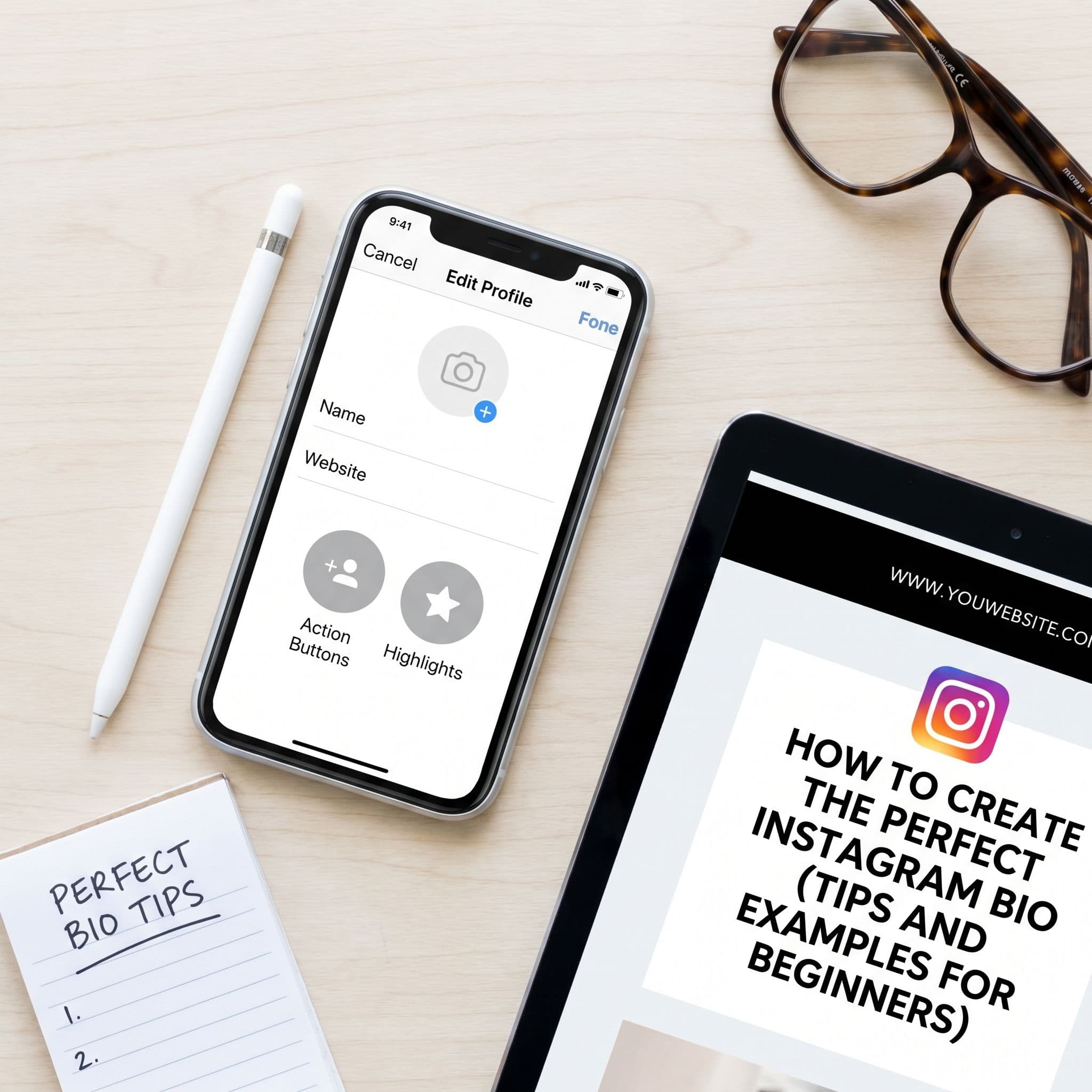
The Name Field Is Searchable. Use It.
Most people put their actual name in the Instagram name field and call it done. That's a missed opportunity, especially if you're not already well-known enough that people are searching for you by name.
Your name field and your username are both searchable on Instagram. When someone types 'real estate agent Dallas' or 'meal prep coach' into the search bar, Instagram looks at name fields to surface relevant accounts. So if your name field just says 'Jessica Martinez,' you're invisible to anyone searching by niche or profession.
The fix is simple. Add your niche, title, or specialty to your name field alongside your name. Something like 'Jessica Martinez | Dallas Realtor' or 'Mike Chen | Meal Prep Coach' gives Instagram the signal it needs to show your profile in relevant searches. This one change can meaningfully increase the number of people who discover your account without you doing anything else differently.
Think of your name field as a tiny SEO headline. It's one of the few places on Instagram where keywords directly affect whether people find you. Use it intentionally. If you're a coach who works specifically with women in their 30s, put that in. If you're a photographer who shoots weddings in a specific city, put that in. The more specific your name field, the more likely you are to show up when the right person searches.
The Link in Bio Is Not a Set-It-and-Forget-It Tool
The link in bio is one of the most underused tools on Instagram. Most beginners drop their homepage URL in there when they first set up their account and leave it untouched for months. Sometimes years. That's a waste of one of the only clickable spots Instagram gives you.
A strong link-in-bio strategy does two things. First, it uses a link-in-bio page so you can point followers to different destinations — your latest product, your newsletter, a free resource, a booking page — without changing the URL every time. Second, it matches whatever you're currently posting about. If you spend two weeks posting about your new online course, your link should go directly to that course page. When your link matches your content, clicks go up.
Update your link when your content focus shifts. A link that made sense three months ago might send people somewhere irrelevant today. Keep it current and connected to whatever you're actively promoting.
Writing a Call to Action That Gets Clicks
Your call to action should tell people exactly what to do and why. 'Link in bio' is not a call to action. 'Grab the free meal plan below' is. 'DM me your biggest challenge' is. 'Book your free call' is.
The best CTAs are specific and low-friction. They tell the visitor what they're getting and make it feel easy to take the next step. If your CTA is vague, people skip it. If it's specific and relevant, people click.
Pick one action you want visitors to take and write your CTA around that single thing. One action. Not two. Not three. When you give people too many options, they pick none. Keep it simple: one link, one instruction, one reason to click.
Your Bio Is a Promise. Your Content Schedule Is How You Keep It.
The Gap Between Your Bio and Your Posting Habits
Here's something most Instagram bio guides never mention. Your bio can be perfectly written and still hurt your growth — if your content doesn't back it up.
If your bio says 'daily fitness tips' and you've posted four times in the last two months, every new profile visitor sees that gap. They read your bio, scroll your grid, and do the math. The result is a quiet kind of distrust where someone thinks 'this account doesn't seem active' and keeps scrolling without following.
Consistency between your bio promise and your posting cadence is what turns profile visitors into followers. Writing a great bio is step one. Showing up regularly enough to back it up is step two. And step two is where most people fall off.
The good news is you don't have to post manually every day to maintain a consistent presence. An AI Instagram scheduler like Aidelly can plan, draft, and schedule your content in advance so your grid stays active even when life gets busy. You set the cadence, and the content keeps going out. Your bio promises daily tips. Your scheduler makes sure those tips actually show up daily.
How to Match Your Bio Promise to a Realistic Schedule
Before you write your bio, decide how often you can actually post. Be honest with yourself. If you can commit to three posts a week, great. If it's one, that's fine too. What matters is that your bio doesn't promise more than you can deliver.
If your bio says 'weekly home-buying tips,' post weekly. If it says 'new recipes every Sunday,' post every Sunday. Alignment between what you say and what you do builds trust over time, and trust is what turns a casual visitor into a loyal follower.
Pick a cadence you can stick to, write your bio around that cadence, and then build a content system that supports it. Aidelly's visual content calendar makes this easier to manage. You can map out a month of content at once, spot the gaps before you fall behind, and fill them while you still have time. It's a lot easier to stay consistent when you can see your whole schedule laid out in front of you.
Updating Your Bio as You Grow
Your Instagram bio isn't permanent. It should evolve as your content, your audience, and your offers change. A bio that made sense when you had 200 followers might not serve you as well at 2,000. Revisit it every few months and ask: does this still match what I'm posting? Does it reflect my current offer? Is the CTA still relevant?
Think of your bio as a living document. The structure stays the same, but the specifics should update as you grow. When you launch a new product, update the CTA. When you shift your niche, update the 'who you help' line. When you add a new resource, update the link.
Small tweaks made regularly keep your bio working as hard as your content does. Set a calendar reminder every 90 days to review it. Five minutes of attention can make a real difference in how many profile visitors decide to follow you.
A strong Instagram bio won't grow your account on its own. But a weak one will quietly hold you back — turning potential followers into people who scroll past without a second thought. Get the structure right, use your name field for search, keep your link current, and make sure your content actually backs up what your bio promises.
That last part is where most people get stuck. Writing the bio is the easy part. Showing up consistently enough to make it credible is harder — especially when you're running a business or building a brand on your own. That's where the right tools make a real difference. When your content calendar runs itself, you stop worrying about what to post and start focusing on what you're actually building.
If you're ready to back up your bio with a content system that keeps you consistent without burning you out, Aidelly is built exactly for that.
A great bio sets the expectation. Your content schedule is what keeps it. If you want to back up every word in that 150-character promise without manually posting every day, Aidelly's agentic workflows handle the heavy lifting for you, from writing and scheduling to tracking what's actually working. See how it fits into your content routine at aidelly.ai.
Compare Social Scheduling Tools
Evaluating software for your content workflow? Use our buyer guides and comparisons to compare scheduling, approvals, analytics, and AI workflow fit.
Share this article
Related Articles
Managing Multiple Social Media Platforms as a Solopreneur: How to Stop Drowning and Build a System That Runs Itself
Most solopreneur social media advice tells you to post more consistently, use better hashtags, or batch your content on Sundays. That advice is not wrong. But it misses the real problem. The real problem is that you are doing everything manually, platform by platform, day by day, and the system depends entirely on you showing up. When client work gets busy, the content stops. When you take a week off, the pipeline dries up. This article is not about tips. It is about building a system that keeps running even when you are heads-down on a project. We will cover why solopreneurs lose so much time to social media tasks that could be automated, how to keep your brand voice consistent across four or five platforms, and how agentic AI workflows are changing what it means to manage social media alone in 2026.
May 3, 2026
Read more
20 Instagram Post Ideas for Small Businesses and New Creators (Plus How to Turn Them Into a 60-Day Content Plan)
Most small businesses hit a wall on Instagram around week two. The first few posts come easy. Then the ideas dry up, the posting gets inconsistent, and the account goes quiet. It happens to bakeries, coaches, handmade shops, and local service businesses all the time. The problem is not that you lack a story or a product worth sharing. The problem is not having a system. This article gives you 20 proven Instagram post ideas built for small businesses and new creators, each one tied to a real goal like building trust, driving traffic, or getting leads. Then it shows you how to take those 20 ideas and turn them into a full 60-day content pipeline using a visual content calendar and AI tools. No design team needed. No social media degree required. Just a repeatable system that keeps your account active and working for your business.
May 2, 2026
Read more
How Consistent Posting Builds Trust (and Why That's Critical for Your Service Business)
Most service business owners know they should post on social media more consistently. They just don't do it. Not because they're lazy or don't care, but because posting consistently is genuinely hard when you're also running the business, serving clients, handling admin, and trying to have a life. The result is a familiar pattern: a burst of posts in January, a few in March, then silence until something jolts you back into action. That pattern is costing you clients you never even knew were considering you. This article isn't about posting tips or content ideas. It's about why inconsistency is a workflow problem, not a discipline problem, and how fixing the system fixes the trust signal your business sends to every prospect who checks your profile before they ever reach out.
May 2, 2026
Read moreReady to never miss a post again?
Tell Aidelly what to post. It drafts, schedules, and publishes across 9 platforms while you focus on your business.